
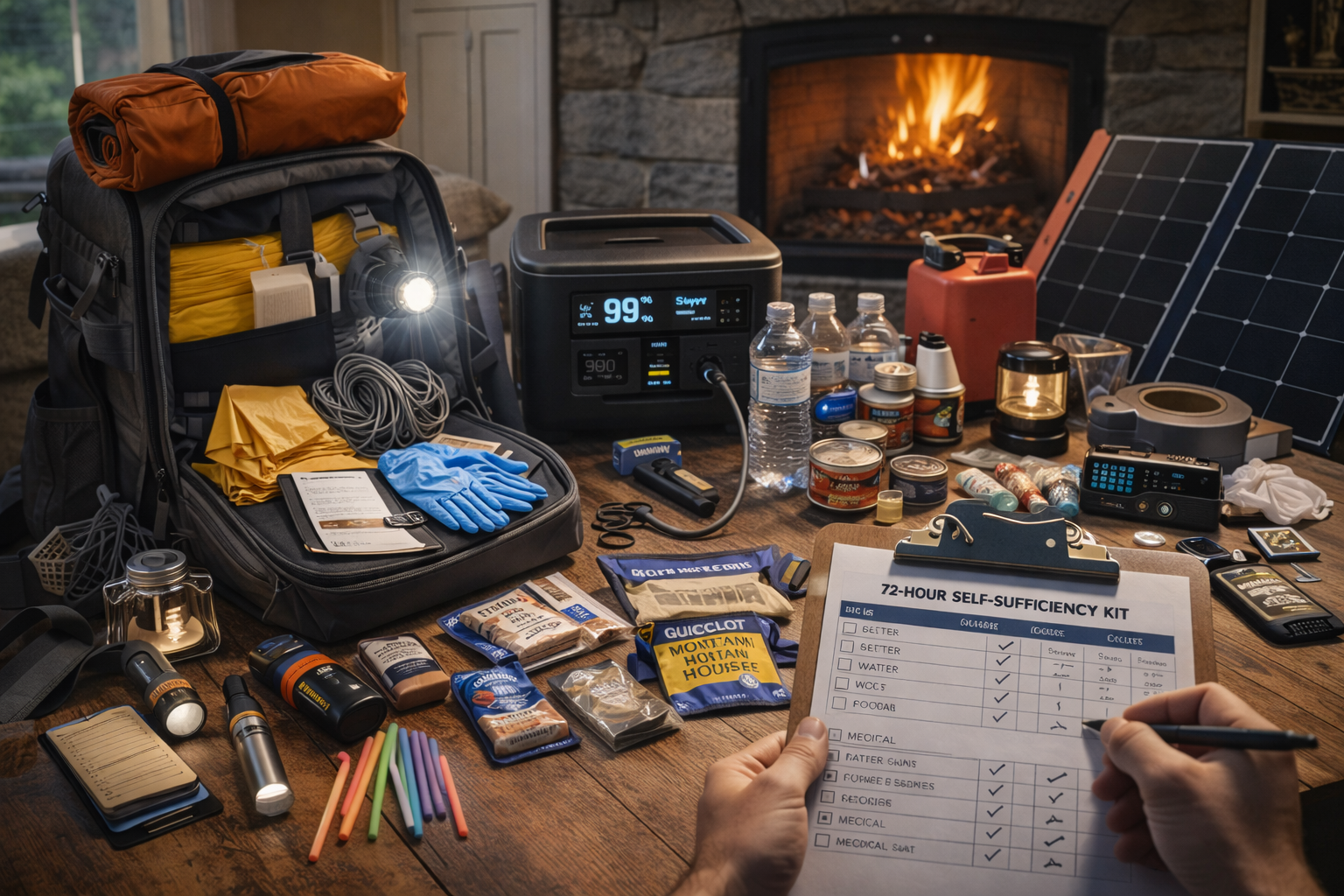
The 72-Hour Self-Sufficiency Kit is the critical bridge between a crisis and the arrival of help. It functions as a portable life support system for your household when primary infrastructure fails.
Most families are unprepared for the first three days of a major systemic disruption. Domestic Systems Engineering requires a pre-positioned kit that covers all biological needs.
A well-engineered kit is not just a bag of supplies; it is a calculated response to failure. It ensures that your home can operate in “island mode” without any external support.
This article details the components and the logic of a high-performance self-sufficiency kit. Learn how to build a modular system that guarantees your family’s safety for 72 hours.
The Logic of the 72-Hour Window
Statistical data shows that major relief efforts typically take three days to reach scale. This 72-hour window is the most dangerous period for an unprepared household.
Your goal is to be completely invisible to the emergency services during this time. By being self-sufficient, you allow first responders to focus on the most vulnerable.
Self-reliance is a civic duty that reduces the overall load on a struggling system. Engineering your kit today prevents you from becoming a statistic tomorrow.
Biological Priority 1: The Water Hydration Module
Water is the non-negotiable foundation of any life support system. A human can only survive three days without hydration under optimal conditions.
Your kit must provide 4 liters of water per person for each day of the 72-hour period. Store this water in durable, BPA-free containers that are easy to transport if needed.
Include water purification tablets or a high-quality portable filter as a redundant measure. Never rely on the tap when the system’s integrity is even slightly in doubt.
Biological Priority 2: High-Calorie Nutritional Assets
In a crisis, your body consumes more energy due to stress and physical labor. The 72-hour nutrition module focuses on calorie density and ease of preparation.
Include ready-to-eat meals that require zero water or electricity to prepare. Focus on items like protein bars, canned meats, and dried fruits with long shelf lives.
Avoid foods that increase thirst, such as overly salty snacks or dry crackers. Food in this kit is fuel for the machine, not a gourmet experience.
The Lighting and Visibility Module
Darkness increases anxiety and the risk of physical injury during a power failure. A high-performance kit must include multiple independent light sources for the group.
Headlamps are the superior choice because they allow for hands-free movement. Include at least one high-lumen tactical flashlight for signaling or long-range visibility.
Always pack spare batteries in a waterproof container or use rechargeable units with a solar bank. A home that stays lit is a home that stays organized and safe.
The Communication and Information Module
Information is the only tool that can prevent panic during an uncertain event. Your kit must include a battery-powered or hand-crank AM/FM emergency radio.
This allows you to receive official updates when the internet and cell towers are down. Include a physical list of emergency contacts and a local paper map of your area.
Digital devices can fail, so having analog backups is a requirement for resilience. Stay informed to make data-driven decisions for your family’s safety.
The Medical and First Aid Infrastructure
A standard box of adhesive bandages is not a self-sufficiency medical kit. You need a trauma-ready kit that can handle bleeding, burns, and fractures.
Include a 30-day supply of all essential prescription medications for every family member. Add basic over-the-counter assets like pain relievers, antihistamines, and anti-diarrheals.
Medical self-sufficiency means being able to stabilize an injury until professional help arrives. Train every member of the household on how to use the specific items in the kit.
The Sanitation and Hygiene Protocol
Disease spreads rapidly when water and waste systems stop functioning correctly. Your kit must include heavy-duty trash bags and ties for emergency waste management.
Pack wet wipes, hand sanitizer, and soap to maintain a high level of personal hygiene. Include feminine hygiene products and extra diapers if you have infants in the house.
Staying clean is not about comfort; it is about preventing secondary infections. Sanitation is a core engineering requirement for long-term domestic stability.
The Shelter and Thermal Protection Layer
If your home’s windows are broken or the heating fails, you need a backup. Include emergency space blankets that reflect 90% of your body heat back to you.
Pack a change of warm, moisture-wicking clothes and extra socks for every person. A lightweight, waterproof poncho is essential for any task performed outside in the rain.
Protecting your core temperature is a vital part of the life support protocol. Cold is a silent threat that can incapacitate a system faster than hunger.
The Multi-Tool and Repair Inventory
Crises often require immediate physical intervention or improvised repairs. A high-quality multi-tool with pliers, blades, and screwdrivers is a mandatory asset.
Include a roll of heavy-duty duct tape and several meters of paracord for general use. A manual can opener is essential if your food module includes canned goods.
These tools allow you to adapt your environment to the evolving needs of the crisis. Versatility is a key characteristic of failure-proof domestic engineering.
The Financial Liquidity Buffer
Digital payment systems are highly vulnerable to power outages and cyber attacks. Your 72-hour kit must contain a small reserve of physical cash in small bills.
This allows you to purchase fuel or supplies from local vendors who cannot process cards. Store the cash in a waterproof, discreet pouch within the main kit.
Liquidity ensures that you can acquire resources when the digital economy is frozen. Money is a tool for problem-solving that must remain accessible at all times.
Modular Packaging and Accessibility
A 72-hour kit is useless if you cannot find it or carry it during an evacuation. Use a durable, waterproof backpack to keep all modules organized and portable.
Label each internal pouch clearly so that any family member can find specific items. Store the kit in a designated “Ready-State” location near an exit.
Test the weight of the bag to ensure it can be carried for several kilometers. Portability is the ultimate backup for a home that becomes uninhabitable.
The Maintenance and Rotation Cycle
A self-sufficiency kit is not a “set it and forget it” project. Food, water, and batteries have expiration dates that must be monitored.
Schedule a “Kit Audit” every six months as part of your Maintenance Mindset. Replace any items nearing their end-of-life and check for signs of damage.
Your kit is only as good as the freshest item inside its compartments. Regular maintenance ensures the system is ready when the grid goes dark.
Frequently Asked Questions
- Should I buy a pre-made kit? Pre-made kits are a start, but custom kits are more reliable.
- How much does a good kit cost? You can build a high-quality kit for the price of a smartphone.
- Where is the best place to store it? Near the primary exit or in the “Safe Room.”
- Do I need one for my car too? Yes, a vehicle kit is a secondary redundancy for your home.
The Structural Rule of the 72-Hour Kit
If you are waiting for a disaster to buy your supplies, you are already too late. Build your life support system today so you can lead your family tomorrow.

Adam Hulk is a professional barista, sensory analyst, and dedicated coffee educator with over a decade of experience in the specialty coffee industry. His journey began in the high-altitude farms of Colombia, where he spent a year studying the delicate relationship between volcanic soil and bean density.