
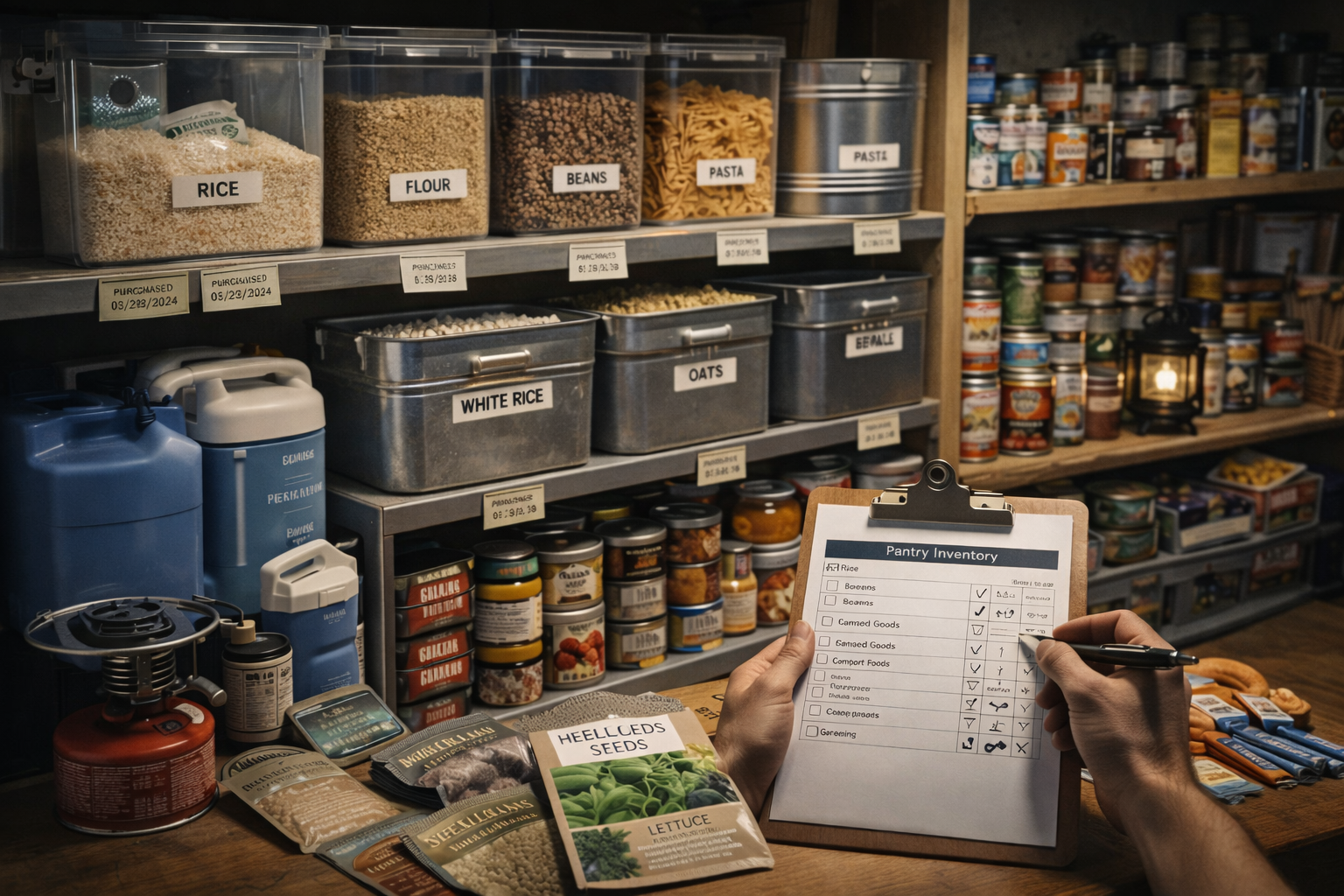
Food Resilience is the strategic management of nutritional assets to ensure household continuity during supply chain failures. In a high-performance home, food is treated as a critical inventory that must be managed with industrial precision.
The modern “just-in-time” grocery model is built on a fragile network of global logistics and fuel availability. Most metropolitan areas only hold enough food on retail shelves to sustain the local population for approximately three days.
Domestic Systems Engineering requires moving away from daily shopping toward a robust, decentralized on-site storage model. This article details the engineering of a long-term pantry that provides security, nutrition, and psychological stability during crises.
Learn how to build a food system that functions as a redundant node in an increasingly unstable world. A resilient pantry is not a collection of random cans; it is a calculated life-support infrastructure for your family.
The Psychology of Nutritional Security
Nutritional security is the primary driver of social order and mental clarity within the domestic environment. Hunger triggers a biological stress response that impairs decision-making and increases friction between household members during a crisis.
Knowing that you have a six-month supply of food creates a psychological “buffer” that allows for calm, rational action. This mental peace is a functional asset that is just as important as the calories stored on the shelves.
Food is the fundamental fuel for the human component of your home’s operational system. Investing in food resilience is an investment in the cognitive performance of your entire family unit.
Mapping the “Deep Pantry” Framework
The Deep Pantry is a tiered storage system that separates daily use items from long-term emergency reserves. Tier 1 consists of the items you eat every week, stored in slightly larger quantities to handle minor disruptions.
Tier 2 consists of bulk staples like grains, legumes, and fats that can sustain life for months if necessary. This framework ensures that you are constantly rotating your stock while maintaining a massive baseline of calories.
A deep pantry should be organized by shelf-life, calorie density, and the ease of preparation during power outages. Engineering your pantry requires a clear understanding of your family’s actual consumption patterns over a 30-day period.
The Logic of Calorie Density
In a crisis, storage space is a premium resource that must be optimized for maximum energy output. Focus on “Calorie-Dense” assets that provide the most energy per square centimeter of shelf space.
Grains, oils, and nut butters are the heavy hitters of a high-performance emergency food system. A single liter of olive oil contains nearly 8,000 calories and serves as a vital fuel for the human body.
Balance these dense energy sources with fiber and micronutrients to maintain digestive health and immune function. Nutrition is a mathematical equation where input must equal the energy required for survival and labor.
The First In, First Out (FIFO) Protocol
The FIFO protocol is the industrial standard for inventory management that prevents waste and ensures freshness. When you buy a new item, it goes to the back of the row; the oldest item is used first.
This rotation system ensures that your “Emergency Food” is simply the food you normally eat, just in higher volume. It eliminates the “expiry date crisis” where you find a closet full of spoiled food during an actual emergency.
Label your shelves with “Purchase Dates” to make the rotation process visible and intuitive for all household members. Discipline in rotation is the only way to maintain a long-term pantry without losing money to spoilage.
Inventorying the “Base Staples”
Every resilient pantry should be built upon a foundation of five core categories: grains, proteins, fats, sugars, and salts. Rice, wheat, and oats provide the complex carbohydrates needed for sustained physical and mental energy.
Beans, lentils, and canned meats provide the protein required for muscle repair and immune system maintenance. Fats like oils and ghee are essential for hormone production and the absorption of fat-soluble vitamins during stress.
Salt and sugar are not just flavorings; they are vital preservatives and electrolytes needed for biological balance. Standardizing your staples allows you to cook a wide variety of meals from a limited, highly-predictable inventory.
Water Requirements for Food Preparation
A major failure in food engineering is forgetting the water needed to rehydrate and cook dried staples. If your pantry is full of dry rice and beans, your water storage requirements must increase proportionally.
Include “low-water” food options like canned soups, stews, and fruits that provide hydration along with calories. A resilient system recognizes the interlocking dependencies between the food pantry and the water reservoir.
Calculate exactly how many liters of water are needed to prepare one week of meals from your dry storage. Redundancy in cooking methods is useless if you lack the fluid necessary to make the food edible.
The Importance of “Comfort Foods”
During a high-stress event, morale is a resource that must be actively managed and protected. Comfort foods like chocolate, coffee, tea, and spices are “psychological multipliers” that keep spirits high.
A bland, repetitive diet leads to “appetite fatigue,” where family members lose interest in eating despite hunger. Include a wide variety of seasonings and condiments to transform basic staples into diverse and interesting meals.
Small luxuries prevent the feeling of “deprivation” and maintain a sense of normalcy in abnormal times. A pantry that supports the soul is just as important as a pantry that supports the body.
Climate Control for Food Longevity
The three enemies of food storage are heat, light, and moisture; your storage area must mitigate all three. Store your deep pantry in the coolest, darkest, and driest part of your home, typically a basement or interior closet.
Every 5-degree Celsius drop in temperature can significantly increase the shelf life of canned and dry goods. Use airtight containers and oxygen absorbers for bulk grains to prevent insect infestation and oxidation.
Proper environmental engineering protects your financial investment in food from the slow decay of nature. Your pantry is a biological warehouse; treat its climate control with the same rigor as an art gallery.
Off-Grid Cooking Infrastructure
A pantry is useless if you lack the means to apply heat to the food during a total power failure. Your food system must include at least two redundant cooking methods that do not require grid electricity.
Portable butane stoves, outdoor charcoal grills, or wood-burning stoves are essential components of food resilience. Maintain a dedicated “Cooking Fuel Reserve” that is sufficient to prepare your Tier 2 staples for 30 days.
Test your emergency stoves periodically to ensure they are functional and that you have the correct connectors. The ability to boil water and cook hot meals is a primary requirement for sanitation and health.
Managing Special Dietary Requirements
A crisis is the worst possible time to deal with an allergic reaction or a dietary deficiency. Ensure your long-term pantry specifically caters to the medical needs of every individual in the house.
If someone is gluten-intolerant or has a nut allergy, their specific staples must be stored in double the quantity. Include infant formula or specialized elder-care nutrition if your household includes those vulnerable groups.
Generic “survival buckets” often fail because they do not account for the unique biological needs of your residents. Customization is the hallmark of professional domestic engineering and effective emergency planning.
The “Silent Inventory”: Seeds and Gardening
Long-term food resilience eventually moves beyond storage and into the realm of active production. Maintain an inventory of “Heirloom Seeds” that can be used to grow calories in your yard or on a balcony.
A garden is a “renewable food system” that supplements your pantry with fresh vitamins and minerals. Start small with high-yield crops like potatoes, squash, and greens that are easy to manage in a crisis.
Gardening is a skill that requires practice; don’t wait for a famine to learn how to plant a seed. Production is the ultimate backup for a storage system that will eventually run out.
Documenting Recipes for “Low-Resource” Cooking
In a crisis, you may not have access to the internet to look up how to bake bread or cook lentils. Keep a physical binder of “Pantry Recipes” that use only the items found in your long-term storage.
These recipes should focus on fuel efficiency, such as one-pot meals that minimize cooking time. Include instructions for “thermal cooking” using insulated boxes to save precious fuel reserves.
Hard-copy information is a vital part of your food infrastructure that cannot be deleted or hacked. Knowledge of how to transform raw staples into nutrition is a key component of resilience.
Frequently Asked Questions
- How much food should I start with? Aim for a 2-week supply of what you normally eat, then expand.
- Is canned food safe after the expiry date? Most cans are safe for years if they are not dented, rusted, or swollen.
- What is the best bulk food to store? White rice and dried beans are the most cost-effective calorie bases.
- How do I prevent mice? Use galvanized steel bins or heavy-duty plastic totes for all bulk bags.
The Structural Rule of Food Resilience
You cannot eat your bank account or your gold bars when the trucks stop moving to the city. Build your pantry while the shelves are full so you can stay home when they are empty.

Adam Hulk is a professional barista, sensory analyst, and dedicated coffee educator with over a decade of experience in the specialty coffee industry. His journey began in the high-altitude farms of Colombia, where he spent a year studying the delicate relationship between volcanic soil and bean density.