
Medical Self-Sufficiency is the strategic capacity to manage health crises when professional emergency services are unavailable or delayed. In a high-performance domestic system, medical care is treated as a critical “Response Infrastructure” rather than just a drawer of bandages.
The modern medical model relies on a “Golden Hour” where help arrives within sixty minutes to ensure survival. In systemic collapses or natural disasters, that window can expand to days, shifting the responsibility of life-saving care to the residents.
Domestic Systems Engineering requires a transition from basic first aid to a trauma-ready household capable of stabilization. This article details the engineering of a home medical system designed to handle severe injuries and long-term health maintenance.
Learn how to build a medical node that provides safety, stability, and professional-grade intervention within your own walls. A resilient home is one where every member is equipped with the tools and the knowledge to save a life.
The Logic of the Tiered Medical Response
A trauma-ready home operates on a tiered response system that scales according to the severity of the medical event. Tier 1 involves minor care, such as managing cuts, burns, or common illnesses with basic supplies.
Tier 2 focuses on “Life-Saving Intervention,” requiring tools to stop massive bleeding or clear obstructed airways immediately. Tier 3 addresses long-term “Care and Recovery,” providing the necessary assets to manage patients for multiple days or weeks.
This structure allows you to organize your medical inventory by urgency rather than by product type. Engineering your response ensures that you don’t waste precious seconds searching for a tourniquet in a box of cough drops.
Mapping the Home Trauma Station
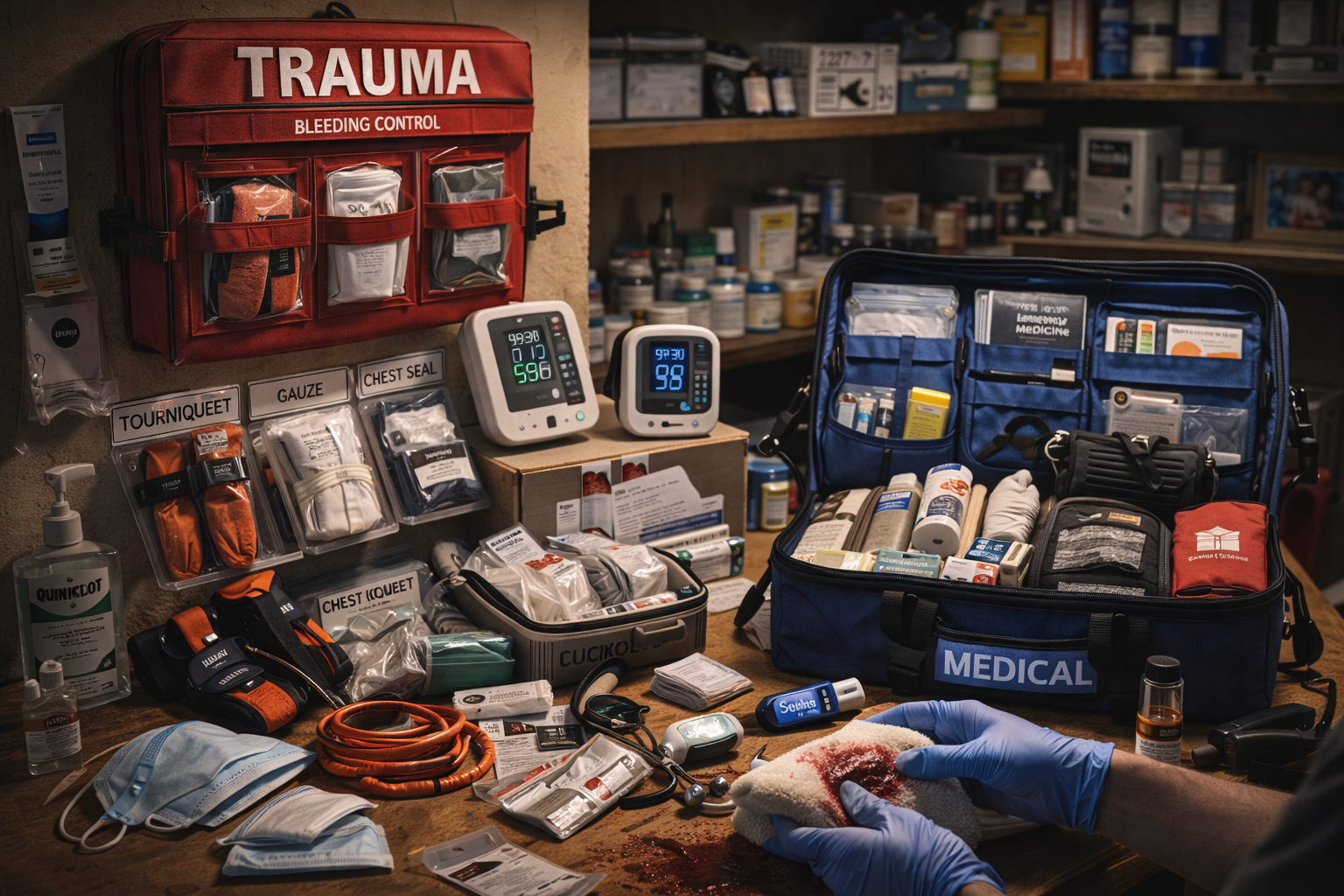
The Trauma Station should be a centralized, highly visible location that is accessible to every member of the household. Unlike a medicine cabinet, this station is designed for rapid deployment during high-stress, high-adrenaline events.
Use a “Wall-Mounted Bleeding Control Kit” as the primary anchor for this specific area of your domestic infrastructure. Ensure the station is clearly labeled and kept free of non-medical clutter to prevent any confusion during an emergency.
Location is a critical engineering factor; the station should be near high-risk areas like the kitchen or workshop. A life-saving tool is only useful if it can be reached and deployed within the first sixty seconds of an injury.
The Inventory of Life-Saving Tools
The core of a trauma-ready home is the “Individual First Aid Kit” (IFAK) logic scaled for a residential environment. Include “Coax-Style Tourniquets” to stop arterial bleeding in limbs, as these are the most effective life-saving devices available.
Add “Hemostatic Gauze” treated with agents that accelerate the blood clotting process in deep or irregular wounds. Chest seals and pressure bandages are essential for managing penetrating trauma to the torso or complex lacerations.
Stock these items in multiples to ensure you have redundancy for a mass-casualty event involving several people. Life-saving hardware must be professional-grade; avoid “generic” or uncertified medical products that may fail under pressure.
Engineering a Long-Term Medication Reserve
Chronic health conditions become acute emergencies when the pharmaceutical supply chain is interrupted or destroyed. Establish a “Medication Buffer” that provides at least a 90-day supply of all essential prescription drugs for residents.
Work with your healthcare provider to secure an extra “Emergency Fill” or use reputable services for backup prescriptions. Store medications in a cool, dark, and climate-controlled environment to preserve their chemical potency over time.
Include broad-spectrum antibiotics and anti-virals if your legal jurisdiction and medical guidance allow for emergency stockpiling. Medical resilience is as much about managing existing conditions as it is about treating new and sudden injuries.
The Role of Diagnostic Equipment
You cannot treat what you cannot accurately measure or diagnose during a stressful medical event. Equip your home with professional-grade diagnostic tools, including an automated blood pressure cuff and a pulse oximeter.
A high-quality infrared thermometer and a stethoscope are vital for monitoring the progression of infections or respiratory distress. Include a blood glucose monitor if any resident is diabetic or at risk for metabolic fluctuations during stress.
Diagnostic data allows you to communicate effectively with remote medical professionals via radio or satellite link. Knowledge of vital signs is the difference between guessing and performing a calculated medical intervention.
Sanitation and Personal Protective Equipment (PPE)
Medical care is a biohazardous activity that requires strict protocols to prevent the spread of infection to the caregiver. Stock a high-volume supply of nitrile gloves, surgical masks, and eye protection for anyone performing medical tasks.
Include medical-grade disinfectants, hand sanitizers, and dedicated disposal bags for contaminated waste and used needles. Proper PPE is the “Firewall” of your medical system, protecting the healthy members of the household from secondary threats.
In a crisis, a small infection can become a lethal complication due to the lack of sterile environments. Engineering cleanliness is a mandatory part of any trauma-ready medical protocol within a domestic setting.
The “Stay or Go” Decision Framework
A resilient medical system includes a clear protocol for deciding when to evacuate a patient versus treating them on-site. Define “Redline Criteria” such as uncontrolled bleeding, loss of consciousness, or signs of septic shock.
If the criteria are met, the system triggers an immediate evacuation to the nearest functional medical facility. If the criteria are not met, the household shifts into “Sustained Care Mode” to conserve external resources.
Decision-making under stress is prone to error, so these protocols must be written down and practiced. A clear framework prevents the hesitation that often leads to worsened outcomes in emergency medicine.
Pediatric and Geriatric Specialization
Children and the elderly have unique physiological requirements that standard medical kits often ignore completely. Include pediatric-sized tourniquets and smaller airway management tools if children are present in the domestic system.
For elderly residents, stock items for managing skin tears, bedsores, and specific cardiac or cognitive support assets. Tailoring your medical engineering to your specific demographic is the only way to ensure total system effectiveness.
Generic care is often inadequate care when dealing with the extremes of human age and biology. Know the specific vulnerabilities of your residents and build your medical infrastructure to protect them.
Knowledge as Infrastructure: The Medical Manual
The best medical tools in the world are useless if the operator does not know how to apply them correctly. Keep a physical, waterproof “Field Guide to Emergency Medicine” stored directly inside your primary trauma station.
This manual should include step-by-step visual instructions for wound care, CPR, and the application of tourniquets. Hard-copy information is the ultimate backup for when the internet is down and stress-induced memory loss occurs.
Supplement the manual with regular “Medical Drills” where all household members practice using the equipment. Skill-building is the “Firmware Update” that keeps your human operators ready for the most difficult tasks.
Dental and Minor Surgical Capability
Dental pain or infection can become incapacitating and prevent a person from eating, sleeping, or working. Include a “Dental Emergency Kit” with temporary filling material, clove oil for pain, and dental wax.
Minor surgical tools like sterilized scalpels, sutures, and skin staplers are for “extreme-case” scenarios only. While these require advanced training, having the hardware on-site allows a trained professional to assist you if needed.
Broadening the scope of your medical kit increases the range of scenarios your home can successfully absorb. Resilience is found in the ability to handle the “nuisance” injuries that could otherwise lead to systemic failure.
The Psychological First Aid Component
Medical trauma creates significant emotional shocks that can ripple through the entire domestic social contract. Include “Psychological First Aid” assets such as sedatives, high-comfort items, and clear communication scripts.
The person providing care must remain calm and authoritative to stabilize the patient’s emotional state. Managing the “Mental Trauma” is just as important as stopping the physical bleeding in a long-term crisis.
A resilient system cares for the mind as much as the body to ensure a full and healthy recovery. Peace of mind is restored when the patient feels that the situation is being managed with professional competence.
Frequently Asked Questions
- Where should I get medical training? Look for “Stop the Bleed” courses or Wilderness First Responder training.
- Do medical supplies expire? Yes, especially adhesives, liquids, and certain medications; check them every six months.
- Are home sutures dangerous? Yes, staplers are generally safer and easier for non-professionals to use correctly.
- How many tourniquets do I need? Aim for one per limb per family member as a high-redundancy baseline.
The Structural Rule of Medical Self-Sufficiency
You are the first responder for everyone living under your roof; the ambulance is a luxury, not a guarantee. Build your trauma station today so you don’t have to watch a preventable tragedy happen tomorrow.

Adam Hulk is a professional barista, sensory analyst, and dedicated coffee educator with over a decade of experience in the specialty coffee industry. His journey began in the high-altitude farms of Colombia, where he spent a year studying the delicate relationship between volcanic soil and bean density.