
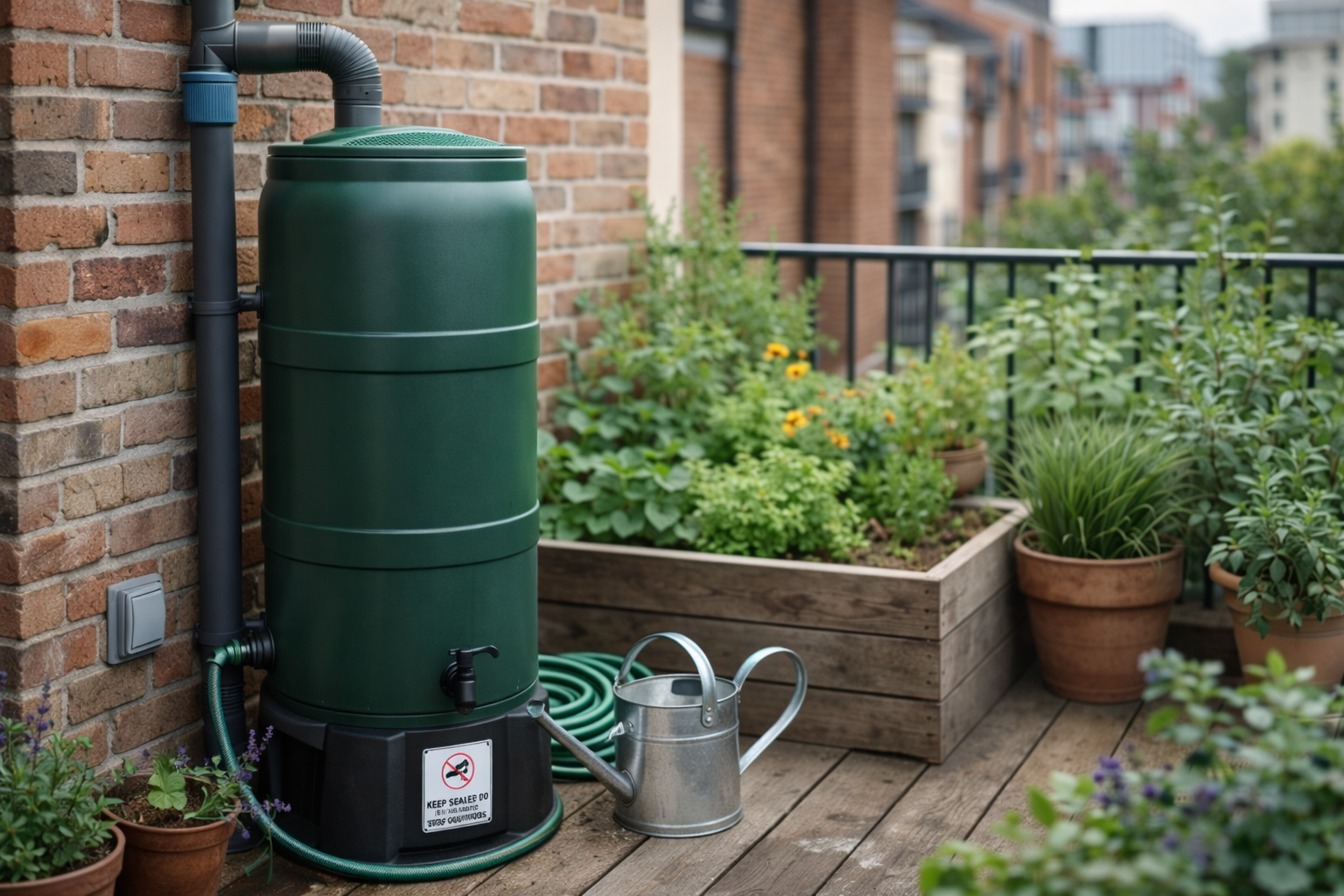
Rainwater harvesting systems are often associated with large rural properties. In small urban spaces, the logic must shift from “mass storage” to “high-efficiency flow.” Collecting water in a city is not about replacing the grid. It is about creating a strategic reserve for specific functions. A balcony or a small patio can become a productive watershed. This requires a precise architectural approach to filtration, storage, and gravity. This article breaks down the systemic requirements for harvesting water when space is your primary constraint.
Why Small-Scale Harvesting Is a Logical Necessity
Cities are heat islands and water sinks. Rainwater is a free, high-quality resource that is usually wasted. Harvesting reduces the load on urban drainage. It provides a backup for drought or service interruptions. Systems in small spaces must be vertical and integrated.
The Physics of Urban Catchment Surfaces
The roof is your primary collector. Even a small awning or a balcony overhang can collect gallons. Calculate the catchment area in square meters. One millimeter of rain on one square meter equals one liter of water. Understanding this math is the foundation of your system capacity.
Why Material Chemistry Dictates Water Quality
Not all roofs are equal. Asphalt shingles can leach chemicals. Metal or tile surfaces are superior for clean harvesting. If your surface is toxic, your water is restricted to non-edible use. Analyze the source before you build the storage.
The Logic of the “First Flush” Diverter
The first few minutes of rain wash away city dust and bird droppings. A first flush diverter bypasses this initial “dirty” water. It is a mechanical gatekeeper for your system. Without it, your storage tank becomes a sediment trap. Clean water starts with a smart bypass.
Why Vertical Storage Beats Horizontal Tanks
In small spaces, square footage is expensive. Tall, slim tanks utilize unused air space. Gravity is also more effective in vertical systems. Higher water columns create better natural pressure. Think like an architect: build up, not out.
Managing the Weight of Water
Water is heavy. One thousand liters weigh one metric ton. Before installing a tank on a balcony, check the structural load capacity. Structural failure is a catastrophic systemic error. Safety is the first rule of urban engineering.
The Importance of Leaf Screens and Micro-Filters
Small systems clog faster than large ones. Leaves and debris create blockages in narrow pipes. Install a multi-stage filtration system. The filter should be accessible for weekly cleaning. Flow is maintained through constant vigilance.
Why Dark Tanks Prevent Algal Bloom
Light is the fuel for algae. Clear or white tanks allow photosynthesis. Use opaque, UV-resistant materials for storage. A dark environment keeps the water biologically stable. Prevention is easier than chemical treatment.
The Role of Overflow Logic in Small Systems
In a heavy storm, your tank will fill in minutes. Where does the excess go? Overflow must be directed away from the building foundation. An unmanaged overflow is a flood risk. Design the exit as carefully as the entry.
Integrating Gravity-Fed Irrigation
Pumps require electricity and maintenance. Gravity is free and reliable. Elevate your tank to create a “head” of pressure. Use the water for plants that sit lower than the tank. Energy efficiency is built into the elevation.
Why You Should Separate Indoor and Outdoor Water Use
Rainwater in small systems is best for non-potable tasks. Watering plants, cleaning balconies, or flushing toilets. Do not cross-contaminate your drinking water lines. Physical air gaps in plumbing are a safety requirement. Logic requires clear boundaries between water types.
The Impact of Biofilms on Tank Health
Over time, a thin layer of bacteria forms on tank walls. In a healthy system, this biofilm helps purify the water. Do not scrub the inside of the tank with harsh chemicals. Work with the biology, not against it.
Why “Modular” Is the Best Architecture for Growth
Start with one tank. Design the plumbing so a second or third can be chained together. Modularity allows the system to evolve with your needs. A rigid system is a brittle system.
The Hidden Benefit of Thermal Mass
A large tank of water acts as a thermal buffer. It can cool a balcony in summer and release heat in winter. Water is a climate control tool for your micro-environment.
Why Rainwater Is Superior for Urban Plants
City water is often treated with chlorine and fluoride. Rainwater is naturally soft and slightly acidic. Plants respond better to the chemical logic of rain. A harvesting system is a health booster for your garden.
Addressing the Mosquito Risk
Standing water is a breeding ground for insects. Every entry and exit point must be sealed with fine mesh. A mosquito-proof system is a social responsibility. Maintenance includes checking seals after every storm.
The Logic of the “Dry” vs. “Wet” Pipe System
Dry systems drain completely between rains. Wet systems keep water in the pipes level with the tank. In small spaces, dry systems are easier to maintain and cleaner. Choose the architecture that minimizes stagnant water.
Why Maintenance Documentation Is Vital
When did you last clean the filter? How old is the tank lining? Keep a logbook of your system’s performance. Documentation prevents “memory rot” in home management.
The Role of Smart Sensors in Water Management
Ultrasonic sensors can track water levels in real-time. Data allows you to plan your usage during dry spells. Knowledge turns a “bucket” into a “utility.”
Dealing with “Rainwater Legality”
Some regions have strict rules about collecting rain. Check local codes before building. Legal compliance is a component of a sustainable system.
Why You Need a Manual Drain Valve
Tanks need periodic sediment removal. A bottom-mounted valve allows you to flush the “sludge.” Design for the cleaning process, not just the collection process.
The Psychology of Water Scarcity
When you harvest your own water, you value it more. Every liter has a visible cost and origin. Systems change the user as much as the environment.
Why Connection Fittings Are the Weakest Link
Most leaks happen at the joints. Use high-quality bulkhead fittings. Don’t use garden hose logic for permanent infrastructure. Engineering requires industrial-grade connections.
How to Winterize a Small Harvesting System
Freezing water expands and destroys tanks. In cold climates, the system must have a “hibernation” mode. Drain and disconnect before the first frost. Logic must account for the seasons.
The Aesthetics of Urban Harvesting
A water tank doesn’t have to be an eyesore. Paint it, screen it with plants, or build it into furniture. Aesthetic integration ensures the system is kept, not discarded.
Why Success Is Measured in “Gallons Diverted”
Track your impact. Every gallon harvested is a gallon not taken from the grid. Metric tracking validates the investment.
Teaching Neighbors the Value of the System
A visible harvesting system is a conversation starter. Demonstrate the logic of independence. Sustainability is contagious when it is efficient.
The Long-Term ROI of Water Autonomy
Water prices are rising. A harvesting system is a hedge against inflation. The payoff is measured in decades of free resources.
Frequently Asked Questions
- Is the water safe to drink? Only with advanced, high-maintenance filtration.
- How much does it cost? A basic small-space system starts around $150.
- Does it attract bugs? Not if the mesh screens are properly maintained.
- How much space do I need? A single square meter is enough for a vertical tank.
The Structural Rule of Water Harvesting
If your water system requires more energy to maintain than it saves in resources, your design is flawed. Simplicity is the highest form of efficiency.

Adam Hulk is a professional barista, sensory analyst, and dedicated coffee educator with over a decade of experience in the specialty coffee industry. His journey began in the high-altitude farms of Colombia, where he spent a year studying the delicate relationship between volcanic soil and bean density.