
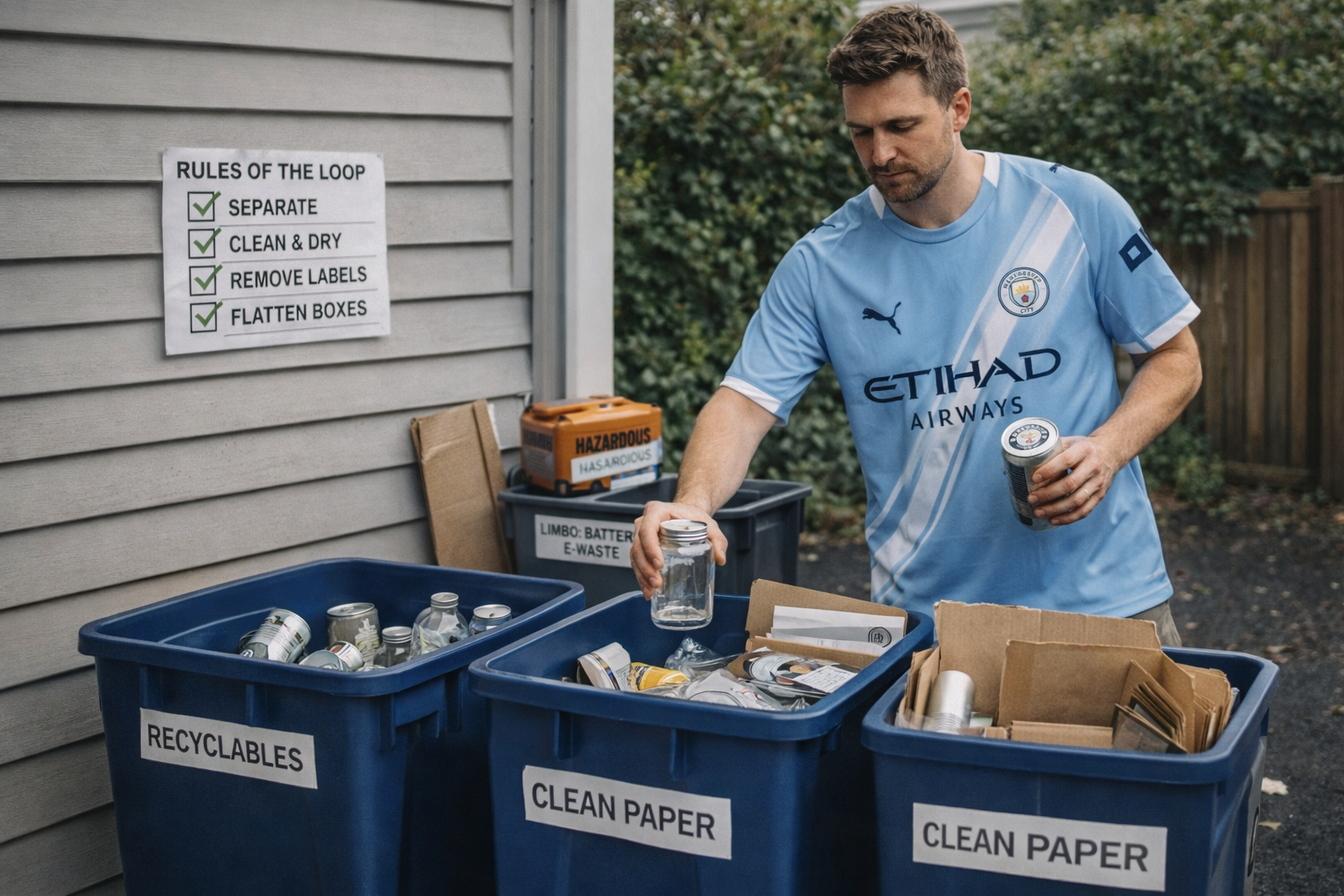
Recycling strategies in the average home are often based on “wish-cycling.” People throw items in the bin and hope for the best. This is not a system; it is a transfer of responsibility. True recycling is an industrial process that begins at your kitchen sink. If your “output” is contaminated, it becomes trash the moment it leaves your door. Fixing the loop requires a structural understanding of material science and local logistics. This article explains how to audit your waste exit point to ensure your system actually works.
Why “Wish-Cycling” Destroys the Global System
Wish-cycling is putting non-recyclables in the bin hoping they will be recycled. This contaminates entire batches of clean material. It increases the cost for the municipality and ends in a landfill. If you aren’t sure, throw it out. Purity is more important than volume.
The Logic of “Material Purity”
Recycling is the recovery of raw materials. Mixed materials (like paper-plastic mailers) are almost impossible to process. The more you separate at the source, the higher the material value. Separation is a structural act of respect for the resource.
Why “Clean and Dry” Is a Non-Negotiable Rule
A peanut butter jar with residue ruins the paper next to it in the truck. Food waste is a contaminant in industrial recycling. Wash and dry every item before it enters the exit bin. If it’s not clean enough to keep in your house, it’s not clean enough to recycle.
The Concept of the “Exit Audit”
Once a month, look inside your recycling bin. What is in there? Why did it enter your home in the first place? The exit audit reveals the failures of your “Entry Logic.” Stop the waste at the door.
Why Plastic Numbers (1-7) Are a Logical Trap
The triangle symbol does not mean an item is recyclable. It only identifies the type of plastic. Most cities only have the infrastructure for #1 and #2. Know your local “Acceptance Map” and ignore the symbols.
The Problem with “Small Items” in Large Systems
Bottle caps and shredded paper often fall through the sorting machines. They become “system noise” and end up as waste. Attach caps back to bottles or collect small items in a larger container of the same material. Size matters in mechanical sorting.
Why Glass and Aluminum Are the Only “Infinite” Loops
Plastic degrades every time it is recycled. Glass and aluminum can be recycled forever without loss of quality. Shift your home’s “Entry Logic” toward these permanent materials. Choose the loop that never breaks.
The Role of “Specialty Exit Points”
Batteries, electronics, and textiles should never be in the curbside bin. They require specialized, low-volume exit paths. Create a “limbo zone” in your home for these items. Once the zone is full, make a dedicated trip to a professional processor.
Why Cardboard Must Be Flattened
Volume is the enemy of transport efficiency. Non-flattened boxes fill trucks with air. Flattening is a courtesy to the logistics system. Efficiency at the curb reduces the carbon footprint of the collection.
The Impact of “Bio-Plastics” on Conventional Loops
Compostable plastics look like regular plastic. If they enter the plastic recycling stream, they ruin the batch. Treat bio-plastics as trash unless you have a high-heat industrial compost exit. Ambiguity is the enemy of the loop.
Why You Should Remove Labels and Tape
Adhesives are contaminants. While industrial processes can handle some, removing them at home increases the grade of your output. A “clean” exit is a high-value exit.
The Logic of the “Circular Habit”
Recycling is the last resort. The priority is: Refuse, Reduce, Reuse, and then—only then—Recycle. If your recycling bin is always full, your system is still failing. Shrink the exit to prove the system’s success.
Why “Downcycling” Is Not Recycling
Most plastic becomes park benches or carpets, which cannot be recycled again. This is a “delayed landfill” strategy. True circularity requires a return to the original form. Be honest about the materials you allow into your home.
The Importance of a “Dry Paper” Zone
Wet paper cannot be recycled. Keep your paper exit separate from your rinsed container exit. Preventing cross-contamination is a design task.
Why You Should Stop Buying Multi-Material Packaging
Pouch-style packaging is a nightmare for the system. It is a “dead-end” material. Vote with your wallet by choosing single-material (monomaterial) items.
The Role of Local Political Advocacy
If your city doesn’t recycle glass, find out why. Systems are built by policy as much as by individuals. Use your data as a citizen to demand better infrastructure.
Why Every Home System Needs a “Hazardous Exit”
Paint, oil, and chemicals need a safe way out. Never pour these down the drain or in the trash. This is the “Black Loop” of the home system. Manage it with extreme caution.
The Psychology of “Out of Sight, Out of Mind”
Once the bin is at the curb, we stop caring. We must maintain an emotional connection to our waste. We are responsible for the entire lifecycle of what we buy.
Why Success Is Measured in “Empty Bins”
The goal is a house that produces almost no external waste. The smaller your bins, the more efficient your home system.
Teaching Neighbors the “Purity Rule”
Contamination in one bin can ruin the whole truck. Shared knowledge in the community protects the local system. Be a leader in your “Exit Strategy.”
The Long-Term Impact of Clean Material Streams
High-quality recyclables are sold by cities to fund programs. Low-quality waste costs tax money to process. Your discipline at the sink has a direct fiscal impact on your city.
Frequently Asked Questions
- Do I need to take the staples out of paper? Usually no, the machines can handle them.
- Can I recycle pizza boxes? Only the clean parts; grease ruins the paper fibers.
- Why can’t I recycle plastic bags at the curb? They tangle in the sorting gears.
- Is recycling actually happening? For metal and glass, almost always. For plastic, it’s complicated.
The Structural Rule of Recycling
If you are not sure if it’s recyclable, put it in the trash. One “good intention” can ruin a ton of “good reality.” Protect the purity of the exit.

Adam Hulk is a professional barista, sensory analyst, and dedicated coffee educator with over a decade of experience in the specialty coffee industry. His journey began in the high-altitude farms of Colombia, where he spent a year studying the delicate relationship between volcanic soil and bean density.