
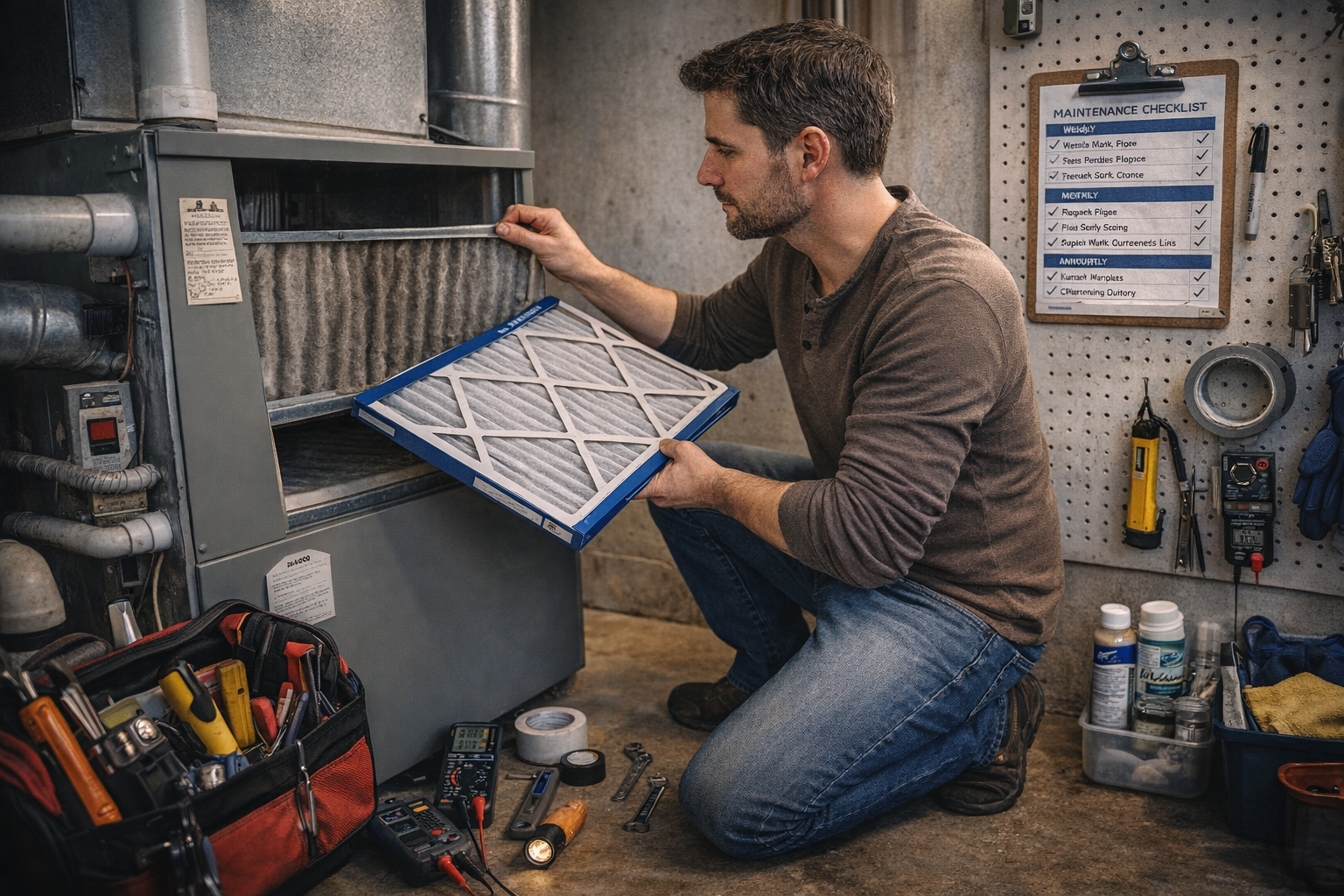
The Maintenance Mindset is the shift from a reactive life to a proactive system. Most homeowners operate in a “break-fix” cycle.
They wait for the faucet to leak, the appliance to stop, or the health to fail before taking action. This is a high-cost, high-stress way to manage a life. In structural engineering and industrial logistics, the goal is always “Preventative Maintenance” (PM).
A machine is serviced before it breaks to ensure zero downtime. Your home and your habits are no different. Transitioning from “fixing” to “preventing” is the ultimate evolution of a high-performance home system.
This article provides the logical framework for shifting your mindset and your home’s architecture toward long-term stability.
Why Reactive Living Is Financially and Mentally Expensive
Fixing a broken pipe at 3 AM is five times more expensive than replacing a worn seal at 2 PM. Emergency labor rates and the stress of the “crisis” are unnecessary taxes on your life. Reactive living keeps you in a state of “survival mode.” You are constantly fighting fires instead of building a legacy. Preventative maintenance is an investment; repair is an expense. The goal of the Maintenance Mindset is to eliminate emergencies entirely.
The Science of “Predictive Failure”
Every physical object and biological system has a predictable lifecycle. Lightbulbs have rated hours; tires have mileage limits; bodies have nutritional requirements. Predictive failure is the logic of knowing when a component is likely to fail. By understanding these timelines, you can schedule the replacement. You remove the element of surprise from your home’s operation. Logic allows you to outsmart the aging process of your assets.
Mapping the “Maintenance Grid” of Your Home
A home is a collection of interlocking systems: HVAC, plumbing, electrical, and structural. Each system requires specific, periodic interventions. Create a “Maintenance Grid” that lists every major component and its service interval. Filter changes every 3 months; gutter cleaning every 6 months; water heater flush once a year. If it isn’t on the grid, it will eventually become a crisis. Control the grid to control the peace.
Why Small Incremental Gains Beat “Deep Cleaning”
The “Spring Cleaning” concept is a symptom of a reactive mindset. It implies that you allowed the house to decay for a year and now must “save” it. The Maintenance Mindset relies on micro-interventions. Five minutes of daily maintenance prevents five hours of weekend labor. Consistency is the multiplier of effort. Keep the baseline high so you never have to “recover” the space.
The Role of “Checklists” in Reducing Cognitive Load
Do not rely on your memory to maintain your home. Memory is fallible and creates background anxiety. Use physical or digital checklists to track your maintenance cycles. A checklist is an externalized “operating system” for your house. It tells you what to do so you don’t have to think about it. Automation of thought is the key to mental freedom.
Why You Should “Service the User” First
The most complex part of any home system is the human inhabitant. If the human is “broken” (tired, sick, burnt out), the house follows. Preventative maintenance for the human includes sleep, nutrition, and rest buffers. You cannot manage a high-performance home from a low-performance body. The user is the primary engine of the system. Maintain yourself as the most valuable asset in the structure.
The Logic of the “One-Minute Rule”
If a maintenance task takes less than sixty seconds, do it immediately. Wiping the counter after use; putting a tool back in its drawer; hanging a coat. These micro-tasks prevent the “accumulation of entropy.” Entropy is the natural tendency of systems to move toward disorder. The one-minute rule is the daily defense against entropy. Speed is the ally of order.
Why “Good Enough” Is the Enemy of Prevention
In maintenance, a “loose screw” is a future failure. Ignoring minor issues creates a “cascade effect” where one small failure leads to a major one. Adopt the “Zero-Defect” philosophy of aerospace engineering. If you see a minor flaw, fix it while it is still minor. Quality is maintained through the refusal to accept decay.
The Relationship Between Maintenance and Resale Value
A well-maintained home has a “paper trail” of care. Keeping receipts for HVAC servicing and roof inspections adds tangible value. It proves to future buyers that the “hidden systems” are healthy. Maintenance is the best way to protect your largest financial investment. You are building equity through discipline.
Using “Audit Days” to Recalibrate the System
Once a quarter, perform a “Systems Audit.” Walk through the house with a fresh eye. Check for leaks, cracks, and clutter. The audit is the moment you step out of the daily routine to look at the big picture. Identify the “weak links” in your habits and your hardware. Recalibration ensures the system remains aligned with your goals.
The Impact of Tools on Maintenance Willingness
If your tools are rusty, buried, or broken, you won’t use them. The maintenance of your maintenance tools is a prerequisite. Invest in high-quality basic tools and keep them in a “Ready-State.” Accessibility drives action. A clean, organized toolbox is a psychological invitation to fix.
Why “Preventative Cooking” Saves Time and Money
Batching food (from a previous article) is the maintenance of nutrition. Having healthy, ready-to-eat components prevents the “crisis” of hunger. Hunger-driven decisions are rarely systemic or healthy. Maintain your energy levels by staying ahead of the hunger curve. Fueling is a scheduled task, not a reaction.
The Role of “Clean Entry” in Reducing Indoor Decay
Prevention starts at the door. Implement a “No-Shoes” policy to prevent outdoor toxins and dirt from entering the system. Use heavy-duty mats to trap debris at the threshold. If the dirt never enters, you never have to spend the energy to remove it. Defense at the border is the most efficient cleaning strategy.
Why Every Appliance Needs a “Birth Certificate”
Keep a log of when you bought every major item and its warranty period. Register your products immediately. Knowing the “age” of your water heater allows you to plan for its replacement before it floods your basement. Data is the foundation of a predictive mindset.
The Psychology of “Ownership Pride”
Maintaining an item increases your psychological attachment to it. When you care for an object, you value it more. This prevents the “throwaway culture” and encourages quality over quantity. Love your things by keeping them in peak condition. Care is the opposite of consumption.
Why “Over-Maintenance” Is a Logical Fallacy
You don’t need to change your oil every week. Follow the manufacturer’s logic or data-driven intervals. Over-maintenance is a waste of resources and time. Find the “Optimal Maintenance Point”—the balance between neglect and obsession. Efficiency is the goal, not perfectionism.
The Concept of “Active Resting”
Rest is the maintenance of the nervous system. Active rest includes stretching, meditation, or walking. It is a “tune-up” for your physical hardware. Do not wait for a burnout or a breakdown to rest. Schedule your recovery as a non-negotiable part of the grid.
Teaching the Maintenance Mindset to the Household
A system only works if all operators follow the protocol. Involve everyone in the “Audit Days” and the “Grid.” Assign “System Ownership” to different family members (e.g., one person owns the garden grid, another the digital archive). Shared responsibility prevents “Maintenance Resentment.”
The Relationship Between Maintenance and Safety
Most home accidents are caused by deferred maintenance. A loose stair rail, a burnt-out outdoor light, or a slippery walkway. Preventing accidents is the ultimate form of home protection. Safety is a byproduct of a disciplined environment.
Why You Should “Automate” What You Can
Use technology to handle the reminders. Smart filters that notify your phone; automated pet feeders; scheduled bill payments. Automation is the highest form of preventative maintenance because it removes the “human error” variable. Let the machines remember so you can live.
The Impact of “Thermal Maintenance” on Long-Term Health
Maintaining a stable indoor climate (temperature and humidity) protects both the house and the humans. Extreme fluctuations stress the building materials and the human immune system. Monitor your “Internal Environment” as part of the grid. Stability is the goal of a controlled structure.
Why Success Is Measured in “Boring Days”
A successful Maintenance Mindset results in a life that feels “boring” in a good way. No sudden leaks, no emergency repairs, no forgotten deadlines. “Boring” means the system is working perfectly. Chaos is a sign of a failed architecture.
The Long-Term ROI of the Maintenance Mindset
You save thousands of dollars over a decade. You save hundreds of hours of “crisis management.” You preserve the “new” feeling of your home and your health. The dividends of prevention are paid in peace of mind.
The Synergy Between “Structural Habits”
This mindset is the “glue” for all other habits. Batching is maintenance of time; Decision Architecture is maintenance of the mind. Buffers are maintenance of the schedule. Together, they create an unbreakable life structure.
Scaling the Mindset for Major Life Transitions
When you move or start a new phase, the first thing you build is the Grid. Don’t wait to “settle in” to start maintaining. The maintenance is the process of settling in. Establish the rules of care on day one.
Frequently Asked Questions
- How do I start if my house is already a mess? Start with one “Grid” item (e.g., the sink) and expand.
- Is maintenance expensive? It’s always cheaper than the repair.
- What if I’m not “handy”? Most maintenance is cleaning and inspecting; hire pros for the rest.
- How do I stay motivated? Look at your “Zero-Crisis” streak as a game.
The Structural Rule of the Maintenance Mindset
If you wait for a system to stop working before you give it attention, you are a passenger in your own life. Be the architect: service the system before it asks for help.

Adam Hulk is a professional barista, sensory analyst, and dedicated coffee educator with over a decade of experience in the specialty coffee industry. His journey began in the high-altitude farms of Colombia, where he spent a year studying the delicate relationship between volcanic soil and bean density.