The Reset Ritual: Why a System Is Only as Good as Its Recovery Phase

The Reset Ritual is the final stage of every high-performance loop. A system without a reset is a system in decay. Most people build structures and expect them to last. But life creates entropy. Surfaces get cluttered. Archives get disorganized. Energy gets depleted. The Reset Ritual is a mandatory recovery phase. It brings the home … Ler mais

The Social Contract of the Home: Building Shared Operating Procedures

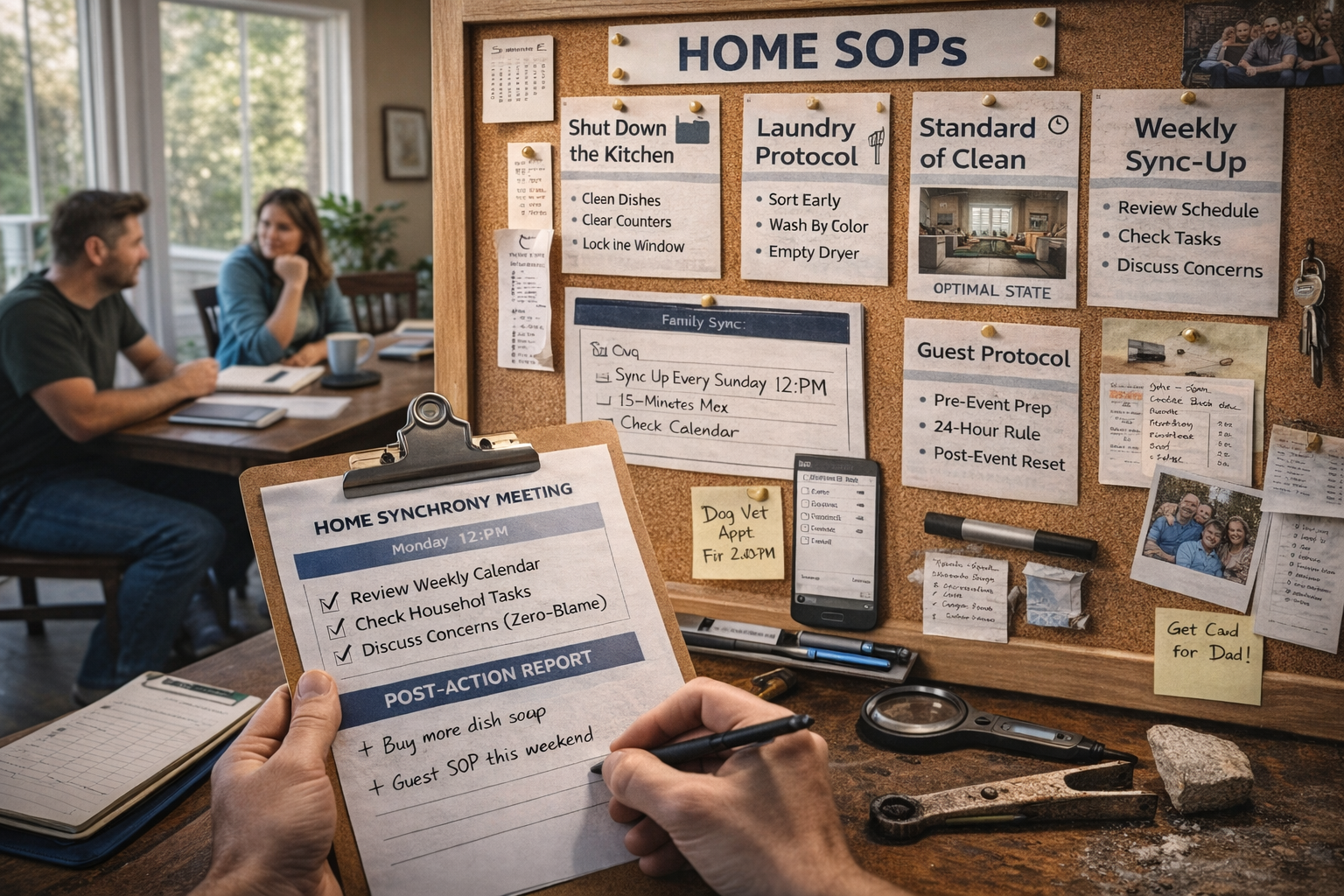
The Social Contract of the home is the invisible structure of cooperation. Most households run on assumptions. Assumptions lead to resentment. Resentment leads to systemic collapse. A high-performance home requires explicit rules. We call these Shared Operating Procedures (SOPs). These are not just chores. They are the “code” for how the house functions. This article … Ler mais

Automated Accountability: Using Low-Tech Cues to Drive High-Level Habits

Automated accountability is the secret to consistency. Most people rely on willpower. Willpower is a finite resource. It fails when you are tired. It fails when you are stressed. High-performance homes use the environment. They use “Low-Tech Cues” for guidance. These are physical signals in your space. They nudge you toward the right action. They … Ler mais

The Logic of “Deep Work” Environments: Structuring Your Home for Focus

Deep Work is the ability to focus without distraction on a cognitively demanding task. Our homes are usually designed for relaxation. They are rarely designed for high-level mental output. The modern remote worker faces a structural crisis. The kitchen table is not a professional environment. The sofa is a trap for the attention. A high-performance … Ler mais

Friction Mapping: Identifying the Physical Blocks in Your Daily Routine

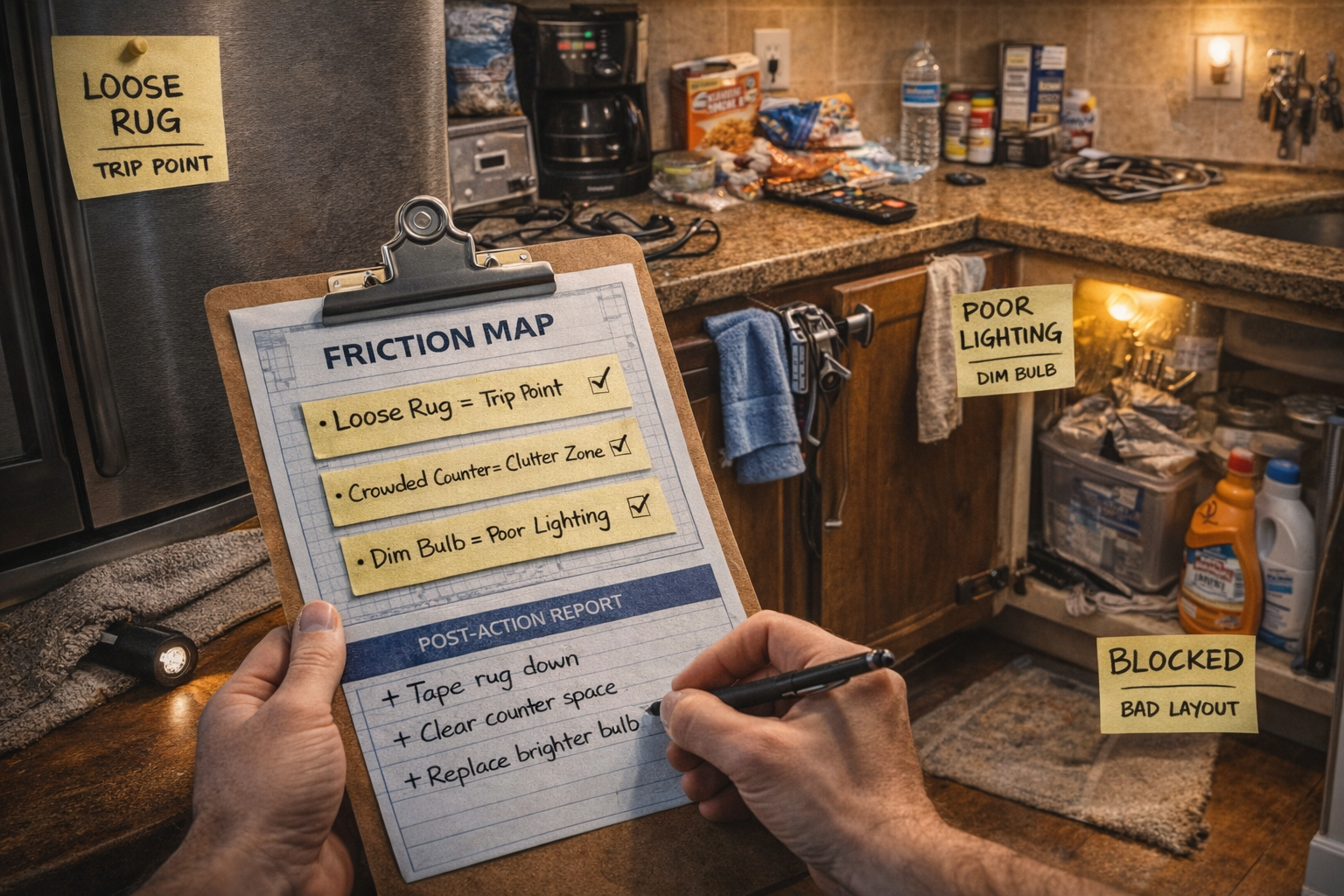
Friction mapping is the analytical process of identifying physical and environmental obstacles that slow down your household operations. In industrial design, friction is anything that prevents a user from completing a task with ease. In the home, friction often goes unnoticed because we adapt to it through “habitual compensation.” You learn to step over the … Ler mais

The Maintenance Mindset: Transitioning from “Fixing” to “Preventing”

The Maintenance Mindset is the shift from a reactive life to a proactive system. Most homeowners operate in a “break-fix” cycle. They wait for the faucet to leak, the appliance to stop, or the health to fail before taking action. This is a high-cost, high-stress way to manage a life. In structural engineering and industrial … Ler mais

Buffer Zones: Why Every Home Schedule Needs Planned Inactivity

Buffer zones are the structural equivalent of expansion joints in a bridge. Without these gaps, the entire structure would buckle under the pressure of daily thermal expansion. Most home schedules are designed with “back-to-back” logic. Tasks are packed tightly into the calendar with zero margin for error. When one task runs late—which it inevitably does—the … Ler mais

The Zero-Inbox Philosophy for Physical Paperwork: Managing the Household Archive

The Zero-Inbox Philosophy applied to physical paperwork is the only architectural solution to prevent domestic bureaucracy from overwhelming a home’s efficiency. Most households treat mail and documents as static debris that accumulates on flat surfaces. Piles of paper are, in fact, deferred decisions that drain both visual and cognitive energy from the residents. A high-performance … Ler mais

The Batching Protocol: Why Real-Time Tasks Are a Systemic Failure

The Batching Protocol is the architectural solution to the inefficiency of fragmented labor. Most people manage their homes using a real-time response model. A task appears, and they react immediately. This is a systemic failure of time management. Reactive labor destroys focus and consumes excessive cognitive energy. High-performance home systems require a shift toward grouped … Ler mais

Decision Architecture: How to Design Your Home to Protect Your Cognitive Energy

Decision architecture is the practice of organizing your physical environment to reduce the number of choices you make daily. Every decision, no matter how small, consumes a measurable amount of glucose in the brain. Choosing what to wear, what to eat, or where the keys are depletes your cognitive reserve. By the evening, this leads … Ler mais