
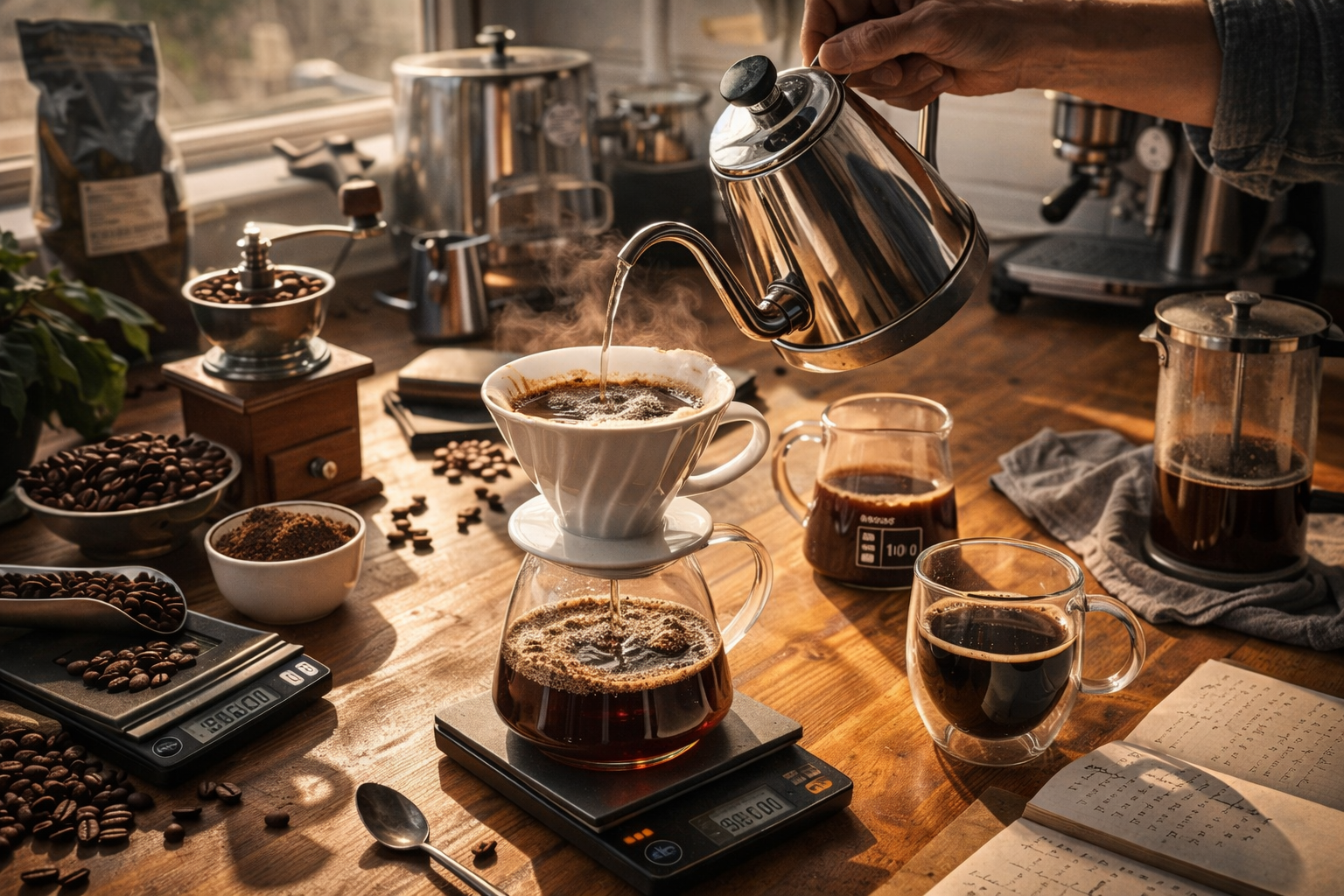
Mastering How to Make Coffee Perfectly represents a transformative ritual that sets a productive tone for your entire day. Many people settle for mediocre coffee simply because they believe professional results require expensive machinery or years of training.
However, achieving perfection at home is entirely possible when you understand the fundamental principles of extraction and quality. This comprehensive guide explores the essential elements that separate a dull caffeine fix from a sensory masterpiece.
Consequently, we will discuss everything from water chemistry to specific techniques for various popular brewing methods. By the time you finish reading, you will possess the knowledge to turn your kitchen into a high-end laboratory.
In addition, understanding coffee is a journey of discovery that rewards patience and great attention to detail. Whether you love the French Press or the delicate Pour-over, the path to excellence starts with basic blocks.
Therefore, let us dive into the world of specialty coffee and unlock the secrets to the perfect brew together. We will examine the science of the bean and the mechanics of the pour to ensure success.
The Foundation of Flavor: Water and Beans
The secret to incredible coffee starts long before you turn on your kettle, beginning with the quality of water. Since a cup is approximately 98% water, using tap water filled with minerals can mask the delicate flavor notes.
For the best results, always use filtered water to ensure a clean canvas for your coffee’s complex profile. Furthermore, the “roasted on” date is the most critical piece of information on any coffee bag you purchase.
Coffee is a perishable product that begins to lose aromatic compounds the moment it leaves the roasting machine. Consequently, try to use beans that were roasted within the last two to four weeks for peak flavor.
In addition, you should prioritize buying whole beans instead of pre-ground coffee to preserve the internal oils. Grinding your coffee immediately before brewing prevents oxidation and keeps the flavors vibrant and intense for your palate.
Therefore, always check the origin and roast level to match your specific taste preferences before buying. Light roasts offer more acidity and floral notes, while dark roasts provide bold, chocolatey, and smoky characteristics.
Precision in the Grind: Finding the Sweet Spot
The size of your coffee grounds dictates how quickly the water can extract flavors during the brewing process. If your grounds are uneven, you will end up with a confusing mix of bitterness and sourness.
Therefore, investing in a burr grinder is the single best equipment upgrade you can make for your home. Burr grinders crush the beans into uniform particles, allowing for a predictable and balanced extraction every time.
Moreover, you must match your grind size to your specific brewing method to achieve a balanced extraction. For instance, a coarse grind is ideal for a French Press, while medium-fine works best for a Pour-over.
As a result, adjusting these small variables allows you to find the perfect flavor for your personal palate. Furthermore, remember that the grind size acts as the primary regulator of the water’s flow rate.
Consequently, if your brew takes too long, you should coarsen the grind to let the water pass faster. Conversely, if the water flows too quickly, a finer grind will increase resistance and improve the overall body.
Temperature and Ratios: The Science of Balance
Precision is the hallmark of a great brewer, especially regarding how you measure your coffee and water temperature. Guessing with spoons leads to inconsistent results; therefore, using a digital scale is highly recommended for total accuracy.
A standard starting point is the “Golden Ratio,” which is roughly 1 gram of coffee for 16 grams of water. By weighing your ingredients, you ensure that the strength of your coffee remains identical every single morning.
Consequently, you can make calculated adjustments to find exactly how bold or light you prefer your daily beverage. Once you find your personal favorite ratio, the guesswork disappears from your routine forever.
Furthermore, water temperature plays a vital role in unlocking the hidden sugars and acids within the coffee bean. Ideally, your water should stay between 195°F and 205°F during the entire extraction process for best results.
Therefore, if the water is boiling, you might scorch the coffee and create an unpleasantly bitter taste. In addition, using water that is too cold results in a flat and sour cup without any complexity.
Mastering the Technique: From Bloom to Pour
The actual brewing process is where the magic happens, and it begins with a vital step called the bloom. When you pour a small amount of hot water over fresh grounds, they will bubble and expand.
This process releases carbon dioxide, which prevents the gas from blocking the water’s access to the coffee’s oils. Furthermore, allow the coffee to bloom for about 40 seconds before continuing your steady and slow pour.
In a Pour-over, use circular motions to ensure that all the grounds are evenly saturated by the water. Consequently, consistency in your pouring technique ensures that the water flows through the coffee at a very steady rate.
Moreover, you should avoid pouring water directly onto the sides of the filter to prevent “channeling.” Channeling occurs when water bypasses the coffee bed, leading to a weak and watery extraction that lacks depth.
Therefore, keep your pour focused on the center and move outward in slow, deliberate spirals for maximum flavor. In addition, maintaining a steady height with your kettle helps regulate the turbulence within the brewing vessel perfectly.
The Chemistry of Extraction: Sweetness and Acidity
Understanding the stages of extraction helps you diagnose problems and improve your technique with every single brew you make. During the first stage, the water extracts the acids and organic salts, creating the initial bright notes.
Consequently, if you stop the brew too early, your coffee will taste overwhelmingly sour and thin. Furthermore, the middle stage of extraction brings out the sugars and the balanced body of the coffee.
Therefore, this is the “sweet spot” where the most pleasant and complex flavors reside for the drinker. In addition, the final stage extracts the heavier plant fibers and the bitter tannins from the ground beans.
As a result, over-extracting your coffee leads to a dry, ashy, and bitter finish that coats the tongue unpleasantly. Moreover, you can control these stages by adjusting your brew time and the temperature of your water.
Consequently, finding the balance between these three stages is the true art of making coffee perfectly at home. Therefore, pay close attention to the aroma and the color of the stream as the brew progresses.
Embracing the Ritual: Mindful Brewing and Tasting
Brewing coffee perfectly is a sensory experience that invites you to slow down and appreciate subtle nuances. As you pour, take a moment to enjoy the aroma filling the room and the changing colors.
This mindfulness turns a simple task into a rewarding hobby that provides a mental break from your busy schedule. In addition, try to drink your coffee black at first to identify the unique characteristics of the origin.
You might notice hints of citrus or chocolatey undertones depending on the specific region where the beans grew. Therefore, developing your palate takes time, but it is an incredibly fun part of the learning process.
Furthermore, different processing methods, like “natural” or “washed,” significantly impact the final flavor profile of the bean. Consequently, exploring these variations allows you to discover which sensory experiences you truly enjoy the most.
Moreover, sharing your discoveries with other enthusiasts can enhance your appreciation for the vast world of specialty coffee. Therefore, join local tasting events or online communities to expand your knowledge and refine your brewing skills.
The journey to culinary excellence requires constant practice and a willingness to experiment with different variables every day. Furthermore, small changes in temperature or grind size can lead to massive improvements in the final taste of your cup.
Consequently, keep a simple notebook to track your favorite recipes and the results of your successful experiments over time. Therefore, you will build a deep understanding of the craft that allows you to brew consistently amazing coffee.
In addition, don’t be discouraged by a bad cup, as every mistake provides a valuable lesson in extraction mechanics. Moreover, the equipment you choose should serve your specific lifestyle and the amount of time you have available.
As a result, a simple AeroPress might be perfect for travel, while a Chemex offers a beautiful ritual for slow mornings. Consequently, your setup should evolve as your passion for the perfect brew continues to grow and expand.
Conclusion
In conclusion, achieving a perfect cup of coffee is a beautiful blend of science, art, and your personal preference. By focusing on fresh beans and precise measurements, you elevate your daily routine into something truly extraordinary and rewarding.
Furthermore, this guide provides the blueprint, but your own curiosity will be your ultimate teacher in this endeavor. Consequently, don’t be afraid to experiment with different origins to find your signature style and enjoy every single sip.
Therefore, we hope these tips inspire you to take your home brewing to the next level of perfection today. In addition, remember that the most important factor is the joy that a well-crafted cup brings to your life.
Moreover, continue to explore new roasters and techniques to keep your coffee journey exciting and fresh every single year. Consequently, you will master the art of coffee and share that passion with everyone around you.
Therefore, grab your kettle and start your next brew with the confidence of a true home barista.

Adam Hulk is a professional barista, sensory analyst, and dedicated coffee educator with over a decade of experience in the specialty coffee industry. His journey began in the high-altitude farms of Colombia, where he spent a year studying the delicate relationship between volcanic soil and bean density.