
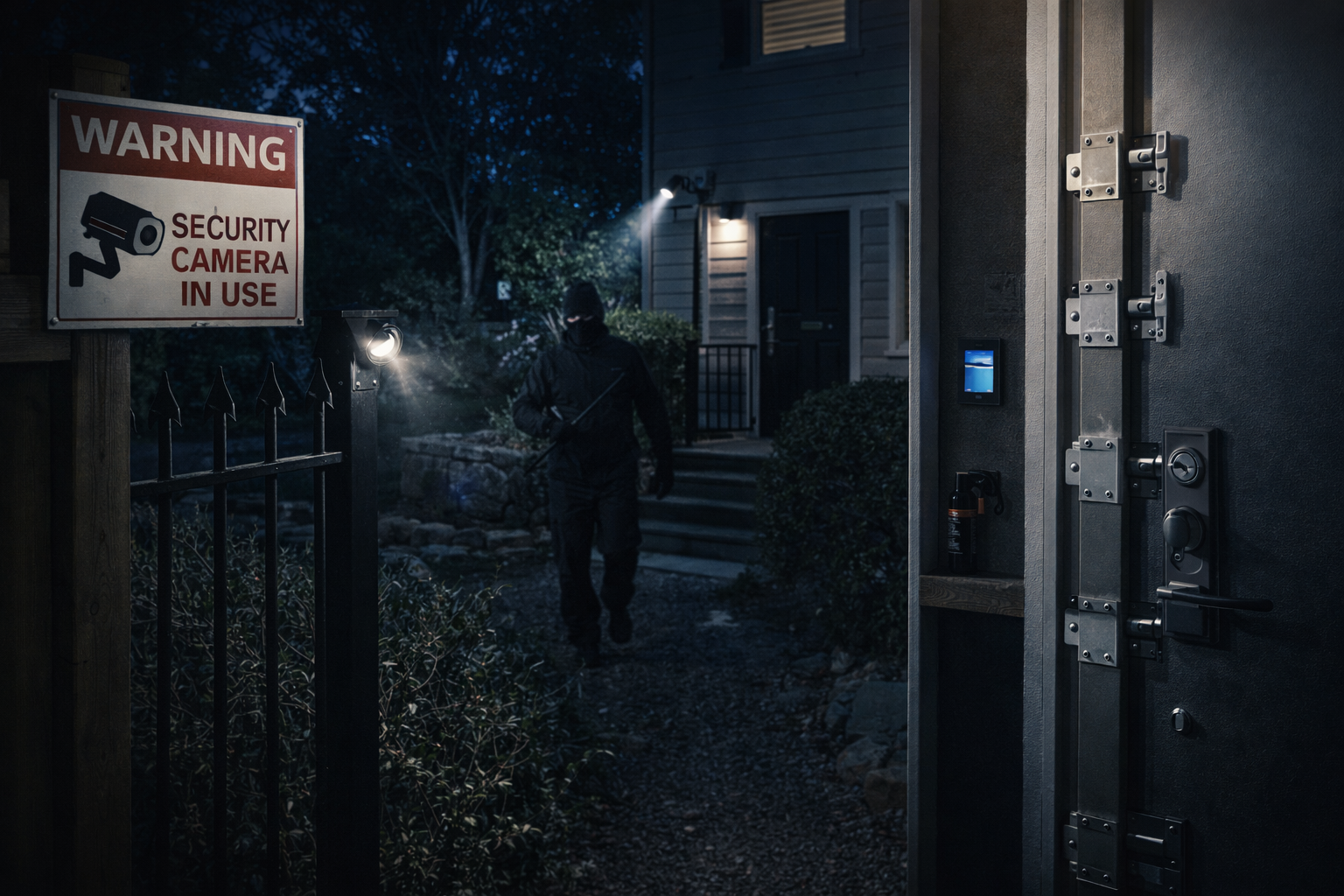
Defense and Perimeter engineering is the science of creating a structural deterrent against external human threats. In a high-performance domestic system, security is not an afterthought; it is a fundamental layer of the home’s architecture.
Most residential security relies on “security theater,” such as flimsy window locks or decorative fences. Domestic Systems Engineering requires a transition to active and passive defense layers that prioritize deterrence, detection, and delay.
A secure home is designed to buy time for the residents to react to a breach in the perimeter. This article details the engineering of a tiered defense system that protects your property and your family.
Learn how to build a fortified domestic environment that discourages intrusion and survives systemic social instability. A resilient home is a hard target that forces an adversary to look elsewhere for a point of vulnerability.
The Logic of Tiered Perimeter Defense
A tiered defense system uses concentric circles of protection to identify and stop a threat as far from the center as possible. Layer 1 is the “Outer Perimeter,” which includes the property line, fencing, and landscaping.
Layer 2 is the “Shell,” consisting of the exterior walls, windows, and doors of the main structure. Layer 3 is the “Internal Safe Zone,” a reinforced area where the family can retreat during an active breach.
This structure ensures that a failure in one layer does not lead to a total compromise of the system. Engineering your defense in depth provides multiple opportunities to intercept a threat before it reaches the interior.
The Psychology of Visual Deterrence
The most effective defense is the one that prevents a conflict from ever beginning. Visual deterrents signal to an intruder that the home is a “Hard Target” with high risks and low rewards.
Visible security cameras, high-quality lighting, and robust physical barriers create an immediate psychological barrier. Signs of occupancy and a well-maintained exterior suggest a vigilant and prepared resident.
Deterrence works by manipulating the cost-benefit analysis of a potential intruder. If your home looks difficult to enter, the rational adversary will move to a more vulnerable location.
Engineering the Outer Perimeter
The outer perimeter is the first point of contact between your private system and the public world. Use “Defensive Landscaping,” such as thorny bushes or dense hedges, to create natural barriers under windows and along fences.
Fencing should be designed to provide maximum visibility from the inside while preventing easy scaling from the outside. Gravel pathways around the perimeter provide an “Auditory Alert” system that signals movement near the house.
Every element of the landscape should serve a secondary purpose of monitoring or obstructing movement. The goal is to eliminate “Blind Spots” where an intruder could hide or work on a breach undetected.
Reinforcing the Structural Shell
The “Shell” is the physical boundary that separates the interior life-support systems from the external environment. Replace standard door frames with reinforced steel plates and use long screws that anchor into the house’s framing.
Solid-core or metal doors are mandatory for any home seeking professional-grade resilience. Apply security film to all ground-level windows to prevent them from shattering upon impact.
Window security film does not make glass unbreakable, but it creates a significant delay during an attempted entry. In defense engineering, time is the most valuable resource you can provide to the residents.
The Role of Active Detection Systems
Detection systems provide the “Data Layer” of your home defense, alert you to a perimeter breach in real-time. Motion-activated lighting is the most effective low-cost tool for identifying movement at night.
Use a combination of smart cameras and localized sensors that alert your mobile devices or a dedicated monitor. Redundancy in power for these systems is critical; they must remain active during a grid failure to be effective.
An alarm that sounds only inside the home is often more valuable than one that calls the police. Internal alerts provide the residents with the immediate awareness needed to execute their defense protocols.
Engineering the Internal Safe Room
The Safe Room is the final “Fall-Back Position” when the exterior shell of the home has been compromised. This room should be a reinforced interior space with a heavy, deadbolted door and no exterior windows.
Equip the Safe Room with a dedicated communication link, such as a radio or a secondary cell phone. Store emergency medical supplies, water, and self-defense tools inside this room for immediate access.
The Safe Room acts as a “Bunker” that provides temporary protection until the threat has passed or help arrives. It is the ultimate redundant layer in the architecture of domestic safety.
Lighting as a Defensive Weapon
Properly engineered lighting can be used to disorient an intruder and provide a tactical advantage to the resident. Floodlights should be aimed outward to create a “Glair Shield” that makes it difficult for someone to see into the house.
Interior lights should be kept low or off during a breach to allow the residents to move through familiar territory in the dark. Use smart-home scheduling to mimic occupancy patterns when the house is empty for long periods.
Lighting management is a passive defense tool that requires very little energy but offers high psychological impact. A well-lit perimeter is the enemy of stealth and the friend of the defender.
The Maintenance of Security Hardware
A deadbolt that sticks or a camera with a dead battery is a failure in the security infrastructure. Schedule a “Security Audit” every three months to test all locks, sensors, and structural reinforcements.
Clean camera lenses and replace batteries in sensors before they reach a critical failure point. Ensure that trees and bushes are trimmed so they do not obstruct the view of your cameras or provide climbing paths.
Maintenance is what separates a functioning defense system from a pile of useless hardware. Discipline in upkeep ensures that the system is ready at the exact moment a threat emerges.
Information Security and Digital Defense
Modern home defense extends into the digital realm where your cameras and smart locks reside. Change default passwords on all IoT devices and use a dedicated, secure network for your home security data.
Avoid sharing details about your security protocols or your “Safe Room” on social media or with casual acquaintances. Physical security is easily bypassed if the digital “Keys” or structural secrets are leaked online.
Digital resilience is a mandatory component of modern Domestic Systems Engineering. Protect the data that controls your physical barriers to ensure the integrity of the whole system.
The Role of Non-Ballistic Defensive Tools
Defense is not always about lethal force; it is about the “Force Continuum” needed to stop a threat. Stock high-intensity pepper gels or bear sprays that can be used from a distance to incapacitate an intruder.
Keep heavy-duty flashlights with “Strobe Modes” to temporarily blind and confuse someone entering a room. These tools provide a way to defend the home without the legal and ethical complexities of higher-force options.
Choose defensive tools that every adult member of the household is trained and comfortable using. Versatility in your defensive inventory allows for a measured and appropriate response to various threats.
Frequently Asked Questions
- Are security signs effective? Yes, they contribute to the “Visual Deterrence” of the hard target.
- Should I get a dog? A dog is an excellent “Auditory Detection” system but requires high maintenance.
- Is bulletproof glass worth it? For most homes, security film is a more cost-effective delay tactic.
- Where is the best Safe Room? An interior master closet or a reinforced basement room.
The Structural Rule of Defense and Perimeter
A home that looks like a target will eventually be treated like one. Engineer your perimeter to be the most difficult obstacle in your neighborhood.

Adam Hulk is a professional barista, sensory analyst, and dedicated coffee educator with over a decade of experience in the specialty coffee industry. His journey began in the high-altitude farms of Colombia, where he spent a year studying the delicate relationship between volcanic soil and bean density.