
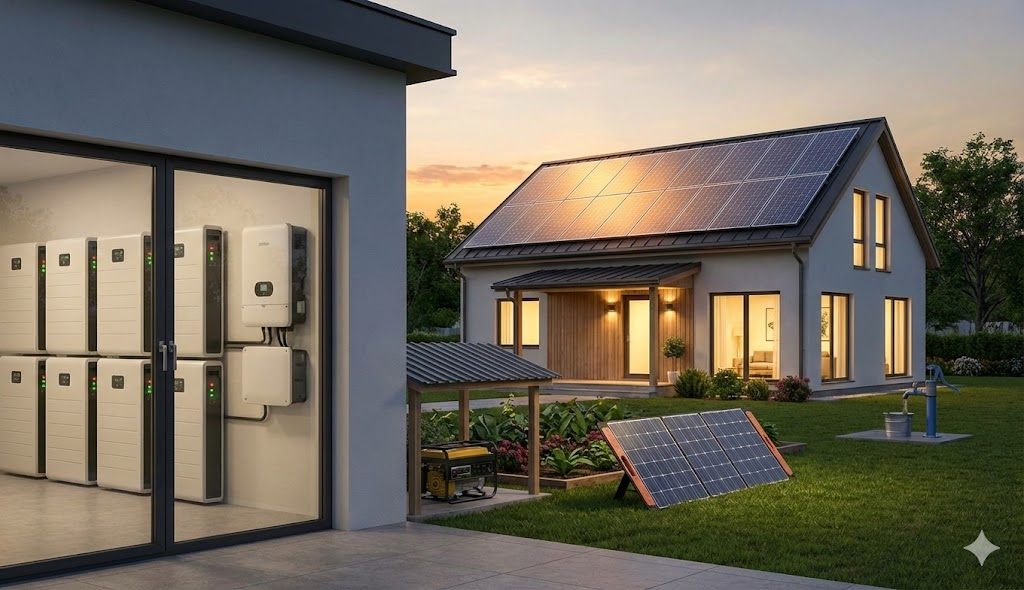
Power Independence is the ultimate goal of domestic energy resilience in a fragile world. It transforms your home from a dependent consumer into a self-sustaining power plant.
Relying exclusively on a centralized electrical grid is a significant structural vulnerability for any household. A single storm or technical failure can cut off your life support systems for several days.
Modern domestic engineering uses the sun as the primary source of redundant energy for operations. Solar systems combined with high-capacity batteries ensure that critical functions remain active during total blackouts.
This article details how to design and implement an independent energy system for your home. Learn to scale your generation and storage to maintain your infrastructure regardless of the grid’s status.
The Logic of Island Mode
“Island Mode” occurs when your home completely disconnects from the public utility grid during a crisis. This allows you to safely consume locally generated energy without the risk of external surges or backfeeding.
Most standard solar installations are designed to shut down automatically when the grid fails for safety reasons. You must install a hybrid inverter to allow your system to operate independently during a power outage.
This separation protects your sensitive electronics and guarantees your autonomy during prolonged systemic disruptions. Having true energy independence is the first major step toward achieving total domestic freedom.
Identifying Critical Load Requirements
You do not need to power every single appliance in your house during a severe emergency. Identify the essential “Critical Loads” such as refrigerators, medical equipment, and internet communication routers.
Calculate the exact wattage consumption of each item to determine the necessary size of your battery bank. Prioritizing critical loads significantly reduces the initial cost and complexity of your backup power system.
Focus on the systems that maintain life, safety, and communication without any interruptions or failures. A well-dimensioned system is far more efficient and reliable than one that tries to do too much.
The Role of Lithium Batteries
Lithium Iron Phosphate (LiFePO4) batteries are the gold standard for modern residential energy storage systems. They offer a long cycle life and can withstand thousands of charge and discharge repetitions.
Unlike traditional lead-acid batteries, lithium units can be deeply discharged without causing internal chemical damage. This maximizes the amount of usable energy available to power your home through the long nights.
Investing in high-quality storage ensures that the sun’s energy works for you twenty-four hours a day. The battery bank is the functional heart of your home’s emergency energy resilience infrastructure.
Fixed versus Mobile Solar Generation
Fixed solar panels on the roof provide the highest capacity for constant, daily energy generation. They are ideal for keeping your primary battery bank fully charged and ready for any sudden disruption.
Portable solar panels offer necessary flexibility for evacuation scenarios or performing repairs in shaded areas. They can be manually positioned throughout the day to follow the sun for maximum absorption efficiency.
Combining both fixed and portable systems creates the extra layer of redundancy required for high-performance homes. Ensuring a constant input of energy is just as important as knowing how to store it properly.
Hybrid Inverters and Management
The hybrid inverter acts as the central brain that manages the flow of electricity in your home. It intelligently decides whether to draw power from the grid, the solar panels, or the batteries.
During a grid failure, the inverter switches to the battery backup in a matter of milliseconds. This speed prevents computers from crashing and ensures that security systems remain fully operational.
Automating the energy flow removes the factor of human error during times of high emotional stress. A high-quality inverter is what ensures that you remain productive while the rest of the neighborhood is dark.
Battery Bank Maintenance Protocols
Emergency energy systems require periodic inspections to guarantee they are ready for immediate deployment. Check all cable connections and voltage levels every month to prevent unexpected failures or fires.
Batteries that remain discharged for long periods can lose their ability to hold a full charge. Maintain a controlled usage cycle to keep the internal chemistry active and extend the system’s life.
Preventative maintenance ensures that your backup power is available at the exact moment you need it. Treat your energy infrastructure with the same rigor you would apply to a professional industrial facility.
Fuel-Based Generators as Redundancy
Mechanical generators running on gasoline or diesel serve as a vital third line of defense. They are essential when there are multiple consecutive days of heavy rain or limited solar input.
Maintain a stabilized reserve of fuel that is sufficient to run the generator for at least 48 hours. Remember that mechanical engines require regular oil changes and spark plug inspections to remain reliable.
The generator should be viewed as a supplemental tool rather than your primary source of energy. Diversifying your energy generation sources is the fundamental secret to achieving absolute domestic resilience.
Integrated Emergency Lighting Systems
Automatic emergency lights should be hard-wired into your primary battery backup system for constant readiness. This ensures that exit routes and critical work areas remain visible even if the main breakers trip.
Utilize low-consumption LED bulbs to minimize the drain on your stored energy reserves during a crisis. Constant visibility reduces panic among residents and facilitates the effective management of any developing emergency.
A well-lit home allows you to execute your safety protocols with precision and physical confidence. Light is the most basic tool required for performing repairs or making critical survival decisions.
Surge Protection and EMP Shielding
Extreme weather events can cause massive voltage spikes that can destroy your expensive home electronics. Install high-quality Surge Protective Devices (SPD) at all entry points of your electrical system.
Consider protecting critical backup components inside Faraday cages to guard against electromagnetic pulses or solar flares. Protecting the hardware is just as vital as generating the energy needed to run the system.
Power is useless if your appliances and inverters are destroyed by a sudden electrical surge. Complete energy security requires multiple layers of both physical and electronic protection.
Real-Time Energy Consumption Monitoring
Use digital apps or physical meters to track exactly how much energy your household is consuming. Knowing where every watt goes helps you extend the duration of your battery reserves during a blackout.
Program your system to automatically disconnect non-essential loads when the battery reaches a critical level. Real-time monitoring transforms raw data into extra hours of survival and comfort for your family.
Energy management is ultimately a matter of intelligence, data, and strict operational discipline. Know the precise limits of your system so that you are never caught off guard by a dead battery.
The Impact of Efficiency on Battery Life
Every watt saved through efficiency is a watt that stays in your battery for an emergency. Replace old, inefficient appliances with modern units that have high energy-star ratings.
Small improvements in insulation and lighting efficiency can double the runtime of your backup system. Efficiency is the cheapest way to increase the capacity of your domestic power grid.
A lean system is a resilient system that can survive longer on limited resources. Focus on reducing the “Baseload” consumption of your home before expanding the solar array.
Scaling the System for Future Needs
Design your energy infrastructure so that it can be easily expanded as your needs grow. Choose inverters that allow for the addition of more battery modules or solar panels later.
The energy requirements of a home often increase as more digital tools are added to the system. Modular design prevents your initial investment from becoming obsolete as technology evolves.
Forward-thinking architecture ensures that your home remains failure-proof for decades to come. Build a foundation today that can support the high-performance demands of tomorrow.
Frequently Asked Questions
- How much does a basic system cost? A reliable entry-level backup costs about one month’s salary.
- Do panels work in the rain? They generate reduced power but still function with diffuse light.
- Can I run an air conditioner? Only with very large and expensive battery banks and solar arrays.
- What is the battery lifespan? Lithium batteries usually last 10 to 15 years with proper care.
The Structural Rule of Power Independence
Power is not something that you simply buy from a utility company; it is something you manage. Assume full responsibility for your own generation and you will never be left in the dark.

Adam Hulk is a professional barista, sensory analyst, and dedicated coffee educator with over a decade of experience in the specialty coffee industry. His journey began in the high-altitude farms of Colombia, where he spent a year studying the delicate relationship between volcanic soil and bean density.