
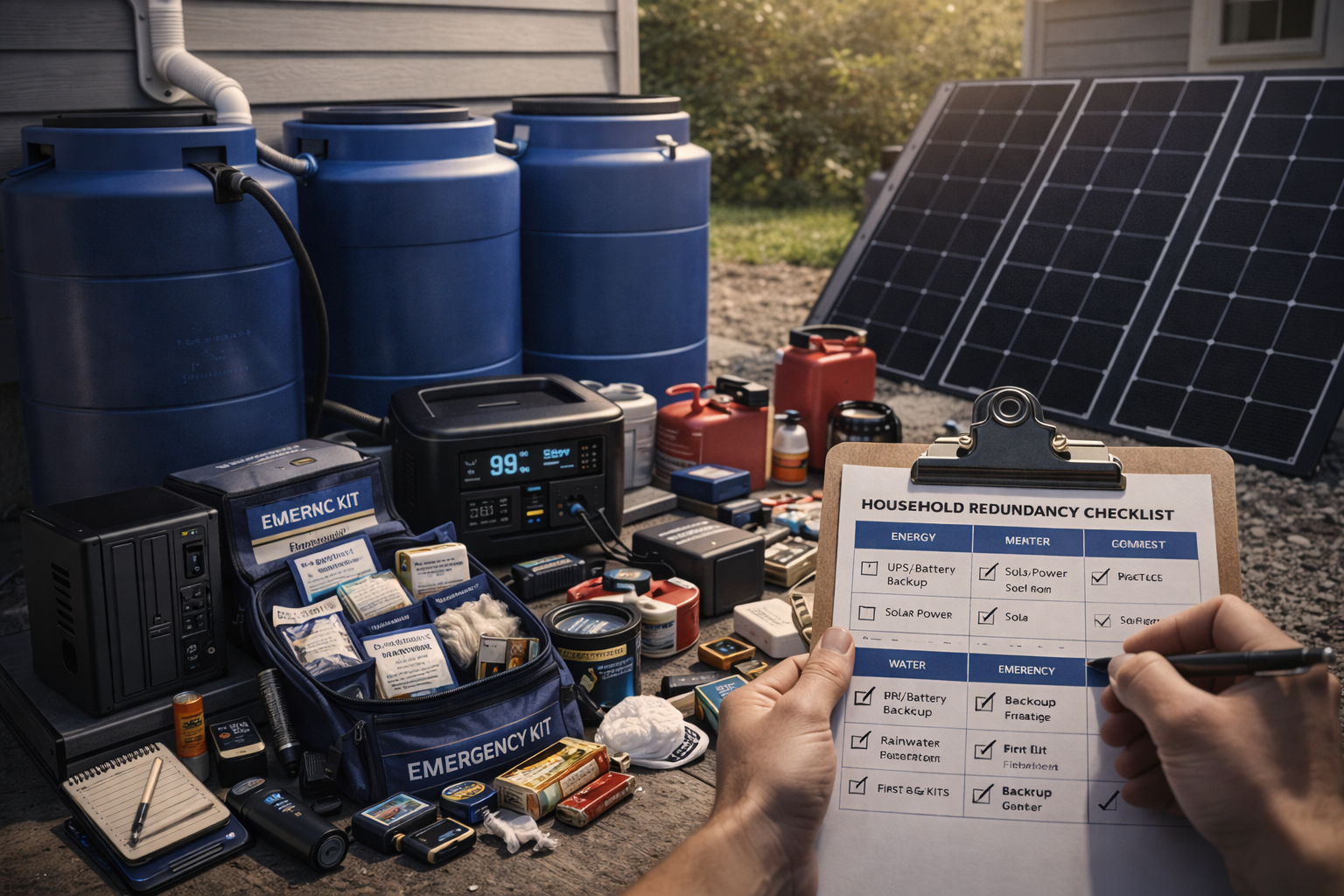
The Redundancy Principle is the fundamental architecture of home safety. It ensures that when one system fails, a secondary backup immediately takes its place.
Most modern homes are built with extreme fragility in mind. They rely on single connections for power, water, and vital communication.
A high-performance home rejects this “all-or-nothing” dependency model. Domestic Systems Engineering requires planned overlaps to absorb unexpected shocks.
This article explores the logic of creating failure-proof domestic infrastructure. Learn how to build a resilient home that remains operational during systemic crises.
Why Single Points of Failure are Systemic Risks
A single point of failure is a design flaw that can paralyze your entire life. If the main power grid goes down, your food preservation and security vanish.
Relying on a single source for any resource is a gamble with your stability. Resilience assumes that the primary grid is temporary and prone to disruption.
Redundancy removes the catastrophic risk of total system shutdown. True security comes from having multiple, independent pathways to achieve a goal.
Mapping Your Primary Domestic Dependencies
Begin by identifying every external resource your household consumes daily. This includes electricity, potable water, digital data, and thermal regulation.
Map exactly where each resource enters your property and how it is distributed. Most homes have a linear supply chain that breaks at the first sign of trouble.
Visualization is the first step toward fortifying your personal infrastructure. Identify the gaps in your supply line before a real crisis forces you to notice them.
The Tiered Strategy for Power Redundancy
Electrical energy is the lifeblood of a modern failure-proof home. A blackout stops communication, climate control, and essential medical equipment.
Implement a tiered backup strategy to handle different durations of failure. Tier 1 should include Uninterruptible Power Supplies (UPS) for critical electronics.
Tier 2 involves portable battery stations for lights and small appliances. Tier 3 requires a whole-home generator or a solar storage system for long-term survival.
Water Security Beyond the Main Valve
Water is your most urgent requirement for physical survival and sanitation. Municipal water systems can fail due to contamination or mechanical breakage.
Redundancy starts with maintaining a 72-hour active reserve of potable water. Store this water in a cool, dark place and rotate it every six months.
Install a secondary rain-catchment system to provide water for non-drinking needs. A home without a backup water supply is a home that must be evacuated quickly.
Thermal Resilience and Passive Backups
HVAC systems are highly complex and prone to mechanical or electrical failure. If your furnace breaks in winter, your home becomes a dangerous environment.
Redundant heating includes low-tech options like wood stoves or indoor propane heaters. Passive backups involve heavy insulation and thermal curtains to trap heat effectively.
Maintain a designated “Safe Room” that is easier to regulate than the whole house. Biological stability depends on keeping your core temperature within a safe range.
Communication Redundancy and Data Integrity
The internet is the primary link to emergency information and remote income. A single fiber-optic or cable line represents a significant point of failure.
Add a secondary cellular 5G hotspot to ensure you stay connected during outages. Satellite internet serves as a third layer of safety for severe, widespread disruptions.
Keep analog tools like battery-powered AM/FM radios to receive local emergency broadcasts. Information is your most valuable asset when the surrounding infrastructure collapses.
Food Asset Redundancy and Local Storage
The modern grocery store is a “just-in-time” system with very little inventory. It typically holds only enough food to feed the local population for three days.
Your pantry must function as a redundant local node for your family’s nutrition. Maintain a deep pantry of shelf-stable assets that your family actually eats.
Use the “First In, First Out” (FIFO) logic to ensure your inventory remains fresh. Self-sufficiency starts with having food that requires no electricity to store or prepare.
The Role of Parallel Systems in Emergency Lighting
Standard electric lights are often the first systems to fail during a storm. Do not rely on a single flashlight buried in a cluttered kitchen drawer.
Install wall-mounted emergency lights that trigger automatically when the power dies. Keep standardized lighting kits in every room of the house for immediate access.
Headlamps are superior to handheld flashlights for performing hands-free repair tasks. Visibility is the first requirement for successful crisis management and home safety.
Redundant Waste Management and Sanitation
Sanitation systems often collapse during floods or severe infrastructure failures. If the sewer lines are compromised, using standard plumbing becomes a health hazard.
Maintain a redundant “Dry Toilet” kit to manage waste safely inside the home. Stock heavy-duty bags, absorbent materials, and medical-grade disinfectants.
Managing your own waste prevents the spread of disease during prolonged outages. Sanitation is the hidden side of resilience that keeps a home truly habitable.
The Manual Override Philosophy for Smart Homes
Every automated system in your home must feature a manual backup option. Smart locks must have physical key cylinders to prevent lockouts during battery failure.
Electric garage doors require a manual release cord that is easy to reach. Electronic water shut-off valves must have a physical wheel for manual operation.
Automation is designed for convenience, but manual control is designed for survival. Test these overrides once per quarter to ensure they are not seized or broken.
Tool Redundancy: The “Two is One” Rule
In high-stakes environments, having only one tool is the same as having none. If your only pipe wrench breaks during a leak, the repair becomes impossible.
Maintain a primary professional toolbox and a secondary set of essential backups. Focus on high-quality manual tools that do not require batteries or electricity.
Redundancy in tools ensures that you can always maintain the system yourself. A resilient home is one where the owner can perform critical repairs at any time.
Transportation Redundancy and Fuel Reserves
Relying on a single vehicle with an empty tank is a massive systemic risk. Keep your fuel tanks at least half-full to ensure an immediate evacuation capacity.
Maintain a secondary mode of transport, such as a bicycle or a small motorcycle. Keep a small, stabilized reserve of fuel in approved containers for emergencies.
Transportation redundancy provides the mobility needed to reach safety or supplies. Mobility is a key component of the Emergency Resilience category.
The Financial Buffer as a Redundant Asset
Digital banking systems can experience downtime during large-scale cyber events. Keep a small amount of physical cash in various denominations inside a home safe.
This “Emergency Cash” serves as a redundant payment system when cards fail. It provides liquidity for immediate needs like fuel, food, or emergency repairs.
A financial buffer is the lubricant that keeps your domestic systems running. It ensures that you can acquire resources when the standard economy is disrupted.
Frequently Asked Questions
- Is redundancy expensive? It requires an initial investment, but it prevents costly disasters.
- How much water do I really need? Aim for 4 liters per person per day for drinking.
- Can I use solar for everything? Only if you have a massive battery bank for nights.
- Where do I start? Start with lighting and 72 hours of water.
The Structural Rule of the Redundancy Principle
If your home depends on a single thread, that thread will eventually snap. Build the overlaps today so you can ignore the failures of tomorrow.

Adam Hulk is a professional barista, sensory analyst, and dedicated coffee educator with over a decade of experience in the specialty coffee industry. His journey began in the high-altitude farms of Colombia, where he spent a year studying the delicate relationship between volcanic soil and bean density.