
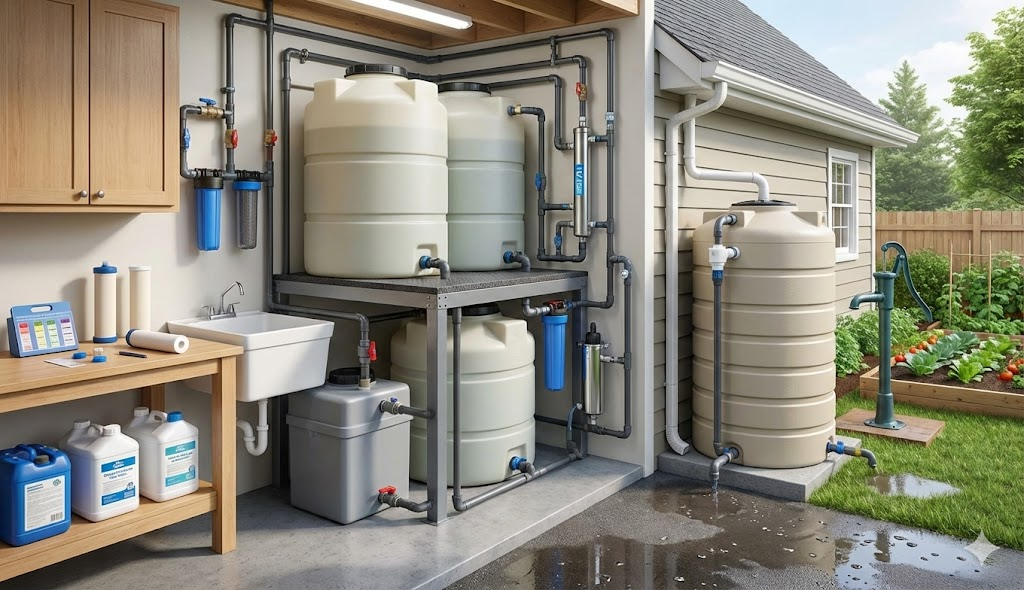
Water Security is the absolute foundation of biological survival and home operational stability. Without a reliable source of hydration and sanitation, your domestic infrastructure becomes a liability.
Most modern homes rely on a fragile, centralized “just-in-time” municipal water supply system. A single contamination event or a mechanical failure at the city plant can cut off thousands.
Domestic Systems Engineering treats water as a critical asset that must be harvested and stored. True resilience requires that your property functions as an independent water node during crises.
This article details the engineering of a redundant water network for the modern home. Learn to capture and preserve this vital resource to ensure your family’s long-term safety.
The Logic of On-Site Storage
Storage is your primary buffer against sudden interruptions in the city’s water infrastructure. A resilient home must maintain a minimum of 72 hours of water for every resident.
Calculate the required volume based on 4 liters per person per day for drinking and hygiene. Store this reserve in food-grade, opaque containers to prevent the growth of harmful algae.
Rotate your stored water every six months to guarantee it remains fresh and biologically safe. Having water pre-positioned at the point of use is the fastest way to manage a crisis.
Rainwater Harvesting Architecture
Rainwater harvesting turns your roof into a high-performance collection surface for vital resources. A standard gutter system can divert thousands of liters of free water into dedicated tanks.
This water is ideal for secondary needs like flushing toilets, cleaning, or emergency gardening. It reduces the total strain on your potable reserves and provides a constant, free supply.
Install a “first-flush diverter” to remove surface debris and pollutants from the initial rainfall. Capturing what falls from the sky is the ultimate form of resource independence and efficiency.
Filtration and Purification Protocols
Captured water or long-term storage must be treated before it is safe for human consumption. A multi-stage filtration system is required to remove sediments, heavy metals, and dangerous pathogens.
Keep portable ceramic or hollow-fiber filters ready for use when the power grid is down. Stock liquid bleach or purification tablets as a low-tech chemical backup for your main tanks.
Boiling water remains the most reliable method for killing biological threats if energy is available. Never assume water is safe just because it appears clear and odorless to the eye.
Gravity-Fed System Design
Electric pumps often fail during power outages, making pressurized water unavailable in the house. Engineering a gravity-fed system ensures water flows even without any mechanical or electrical assistance.
Place your storage tanks at a higher elevation than your primary faucets and sanitation fixtures. This uses natural physics to deliver the resource exactly where it is needed during an emergency.
A gravity-fed backup is a passive system that requires zero energy to operate or maintain. Simplicity in mechanical design is the highest form of reliability in emergency home engineering.
Sanitation and Greywater Management
Managing water is not just about the input; it is about managing the output safely. During a water crisis, you must minimize the use of your primary potable assets for cleaning.
Repurpose “greywater” from sinks or showers to flush toilets or maintain essential food plants. This double-use strategy extends the functional life of your stored water reserves significantly.
Proper sanitation prevents the spread of disease when the municipal sewage system is compromised. Water efficiency is a survival skill that must be mastered before the crisis arrives.
The Maintenance of Water Assets
Storage tanks and gutters require regular cleaning to prevent the buildup of organic matter. Inspect your seals and valves every three months to ensure there are no slow, invisible leaks.
A small leak in your backup tank can result in zero water when the emergency starts. Treat your water system as a high-value piece of machinery that needs constant care.
The Maintenance Mindset applies to your water security as much as your electrical grid. Reliability is built through discipline and the regular checking of every systemic component.
Scaling Storage for Long-Term Crises
While a 72-hour reserve is the baseline, a 30-day supply offers true domestic peace. Scale your storage capacity based on the space available in your garage or basement.
Modular tanks can be linked together to increase your volume without complex new plumbing. The more water you control on-site, the longer you can remain independent of external help.
Long-term storage requires the addition of silver ions or other preservatives to maintain quality. Plan for the worst-case scenario to ensure the best possible outcome for your household.
The Role of Well Water and Groundwater
If your geography allows, a private well is the ultimate water redundancy for any home. Hand-pumps can be installed alongside electric pumps to guarantee access during power failures.
Groundwater is often naturally filtered by the earth but must still be tested regularly. A well provides a deep, insulated source of water that is protected from surface contamination.
Investing in a private well is a major upgrade to your home’s fundamental resilience. It creates a permanent and autonomous source of life-sustaining fluid for your family.
Inventorying Chemical Purification Backups
Chemical treatments are small, light, and easy to store in a 72-hour emergency kit. Iodine and chlorine-based solutions can make questionable water safe in under thirty minutes.
Understand the shelf life of these chemicals, as they lose potency over several years. Include a small dropper and clear instructions in your kit for accurate dosing during stress.
Chemical backups are the “fail-safe” for when your primary filtration systems are broken. Always have three different ways to make water safe to drink in your home.
Monitoring Water Levels with Data
Install ultrasonic or float sensors in your tanks to monitor your water levels remotely. Knowing exactly how much volume remains allows you to ration the resource intelligently.
Digital monitoring provides real-time feedback on your consumption patterns during a crisis. Use this data to identify where the system is wasting water or leaking.
Technology should be used to provide clarity and precision in your resource management. Knowledge of your reserves is the difference between panic and a calculated response.
Frequently Asked Questions
- How long can I store water? Properly sealed and kept in the dark, it lasts six months.
- Is rainwater safe to drink? Only after rigorous filtration and chemical or UV purification.
- What tank material is best? UV-resistant, food-grade polyethylene is the industry standard.
- How much storage is enough? Aim for 500 liters as a baseline for a small family.
The Structural Rule of Water Security
If you do not own your water supply, you do not truly own your home’s safety. Build your tanks and clear your gutters before the next drought or disaster arrives.

Adam Hulk is a professional barista, sensory analyst, and dedicated coffee educator with over a decade of experience in the specialty coffee industry. His journey began in the high-altitude farms of Colombia, where he spent a year studying the delicate relationship between volcanic soil and bean density.