
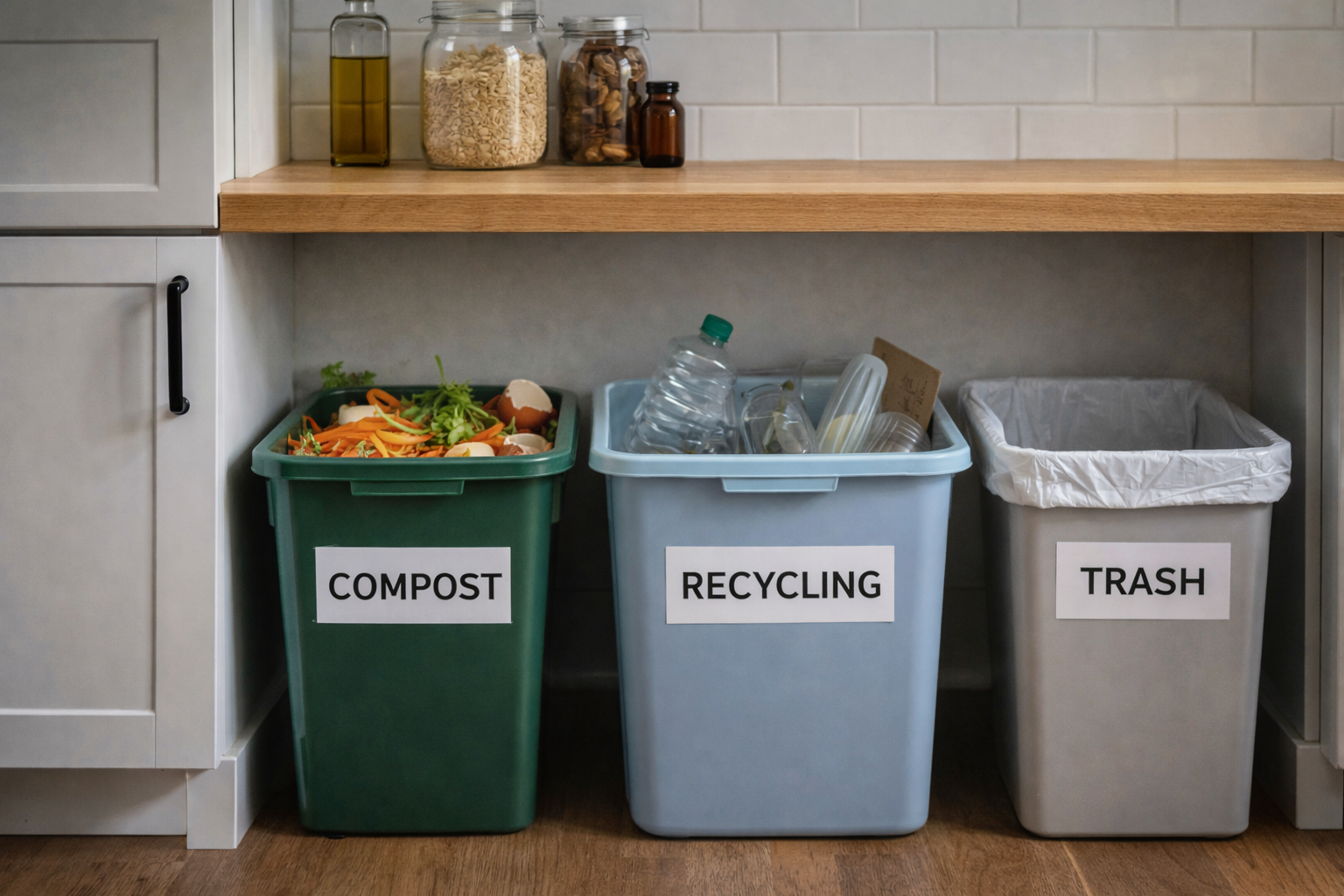
Zero-waste kitchen systems fail when they depend on human memory. Willpower is a finite resource. Systems are infinite. Most people try to “be better” at recycling. This is a tactical error. A kitchen should be designed so that waste is structurally impossible. This article breaks down the architecture of a friction-free zero-waste kitchen.
Why Willpower Is the Enemy of Sustainability
Willpower fluctuates with stress. Systems remain stable regardless of mood. Relying on intent leads to inconsistency. Consistency requires a physical framework.
The Myth of the “Perfect” Recycling Bin
A bin is just a container. A system is a flow. Focusing on the bin ignores the source. Source control is the primary objective.
Why Kitchen Design Dictates Waste Output
Layout influences behavior. If the trash is easier to reach than the compost, you will use the trash. Distance creates friction. Friction destroys habits.
Mapping the Flow of Organic Matter
Food enters as an asset. Food leaves as a resource or waste. The goal is to eliminate the “waste” category. Everything should be a resource.
The Importance of Visual Transparency
Opaque containers hide problems. Transparency forces accountability. When you see what you waste, you adjust. Visual feedback is a silent teacher.
Why Preparation Is the Real Disposal Strategy
Waste happens during prep. How you cut determines what you keep. Structural prep reduces scrap. Scraps are just unmapped ingredients.
Creating a Zero-Waste Input Protocol
Systemic change starts at the door. What enters the kitchen dictates what leaves it. Refuse packaging before it enters the system. Entry control is cheaper than exit management.
The Role of “Transition Zones” in the Kitchen
A transition zone is for items in limbo. Glass jars waiting for refill. Scraps waiting for stock. Zones prevent clutter from breaking the system.
Why Bulk Buying Without a System Creates More Waste
Bulk buying is a tool, not a solution. Without a system, bulk items spoil. Spoilage is a systemic failure of storage. Storage must match consumption speed.
Designing for Minimal Cleaning Friction
Cleaning produces waste. Paper towels are a symptom of poor surface design. Replace disposables with a rotating textile system. Textiles should have a clear “clean-to-dirty” flow.
The Strategic Placement of Compost Stations
Compost should be at the point of origin. If you have to walk, you won’t do it. Proximity reduces the mental cost of action. Make the right choice the easiest choice.
Why You Should Categorize Waste by Material, Not Size
Size is irrelevant to the planet. Material chemistry is what matters. Organize exit points by chemical destination. Separation at source preserves material value.
Avoiding the “Eco-Product” Trap
Buying new “eco” gadgets often adds waste. The most sustainable tool is the one you already have. Systems are built with logic, not shopping carts. Functional utility beats aesthetic sustainability.
The Logic of the “Stock First” Mental Model
Use what exists before adding what is new. This requires a visible inventory system. Inventory visibility prevents redundant purchasing. Redundancy is the father of waste.
Why Every Kitchen Needs an Ambiguity Jar
Some items don’t fit the system yet. Do not let them contaminate clear streams. Isolate uncertainty. Process the ambiguity jar once a week.
Managing the Psychology of “Just This Once”
Exceptions break systems. “Just this once” creates a precedent for failure. Close the loopholes in your kitchen logic. Rigidity in the system allows for flexibility in life.
The Role of Vertical Storage in Waste Prevention
Hidden items are forgotten items. Forgotten items become waste. Verticality keeps everything in the line of sight. Visibility is the best preservative.
Why Liquid Waste Is Often Ignored
Oil and fats destroy plumbing and ecosystems. Create a specific exit path for liquids. Liquids are the most “contaminating” waste form. Control the flow.
The Importance of Routine System Audits
Systems drift over time. Small inefficiencies accumulate. Monthly audits reset the logic. Audits are not chores; they are calibrations.
How to Handle Packaging That “Slipped In”
You cannot be 100% perfect. When plastic enters, have a specific “plastic exit” plan. Do not let it sit in the system. Expel non-system items immediately.
The Difference Between a Clean Kitchen and a Functional One
A clean kitchen looks good. A functional kitchen works for the planet. Prioritize function over surface appearance. Real beauty is systemic efficiency.
Why Your Trash Can Should Be the Smallest Item
Size signals importance. A large trash can invites large waste. Shrink the capacity to force a rethink. Constraint breeds creativity.
Teaching the System to Other Residents
A system is only as strong as its weakest user. Label the logic, not just the boxes. Explain the “why” to ensure compliance. Shared logic is shared success.
The Impact of Meal Planning on System Load
Spontaneous cooking creates chaotic waste. Planned cooking allows for planned disposal. Reduce the load on your exit system. Plan for the scraps before you cook the meal.
Why Success Is Measured by the Empty Bin
The goal is a bin that doesn’t fill. If the bin is empty, the system is working. Track the time between emptying. Data validates the architecture.
Dealing with System Fatigue
Sustainability can be exhausting. A good system takes the “thinking” out of it. If you are tired, the system should carry you. Redesign the parts that feel like “work.”
The Relationship Between Order and Environment
An ordered kitchen reflects an ordered mind. A sustainable kitchen reflects a sustainable future. The two are inseparable. Structure creates peace.
Why This Approach Is Permanent
Tactics change. Logic is forever. Once you see the system, you cannot unsee it. Evolution is a one-way street.
Frequently Asked Questions
- Do I need expensive bins? No. Logic is free; bins are just tools.
- What if my family doesn’t help? Make the system so easy they use it by accident.
- How long to set up? One afternoon of planning saves years of waste.
- Does this work in small apartments? Small spaces require better systems, making this even more vital.
The Structural Rule of Kitchen Sustainability
If your kitchen requires constant effort to stay green, your system has failed. Efficiency is the only path to permanence.

Adam Hulk is a professional barista, sensory analyst, and dedicated coffee educator with over a decade of experience in the specialty coffee industry. His journey began in the high-altitude farms of Colombia, where he spent a year studying the delicate relationship between volcanic soil and bean density.