
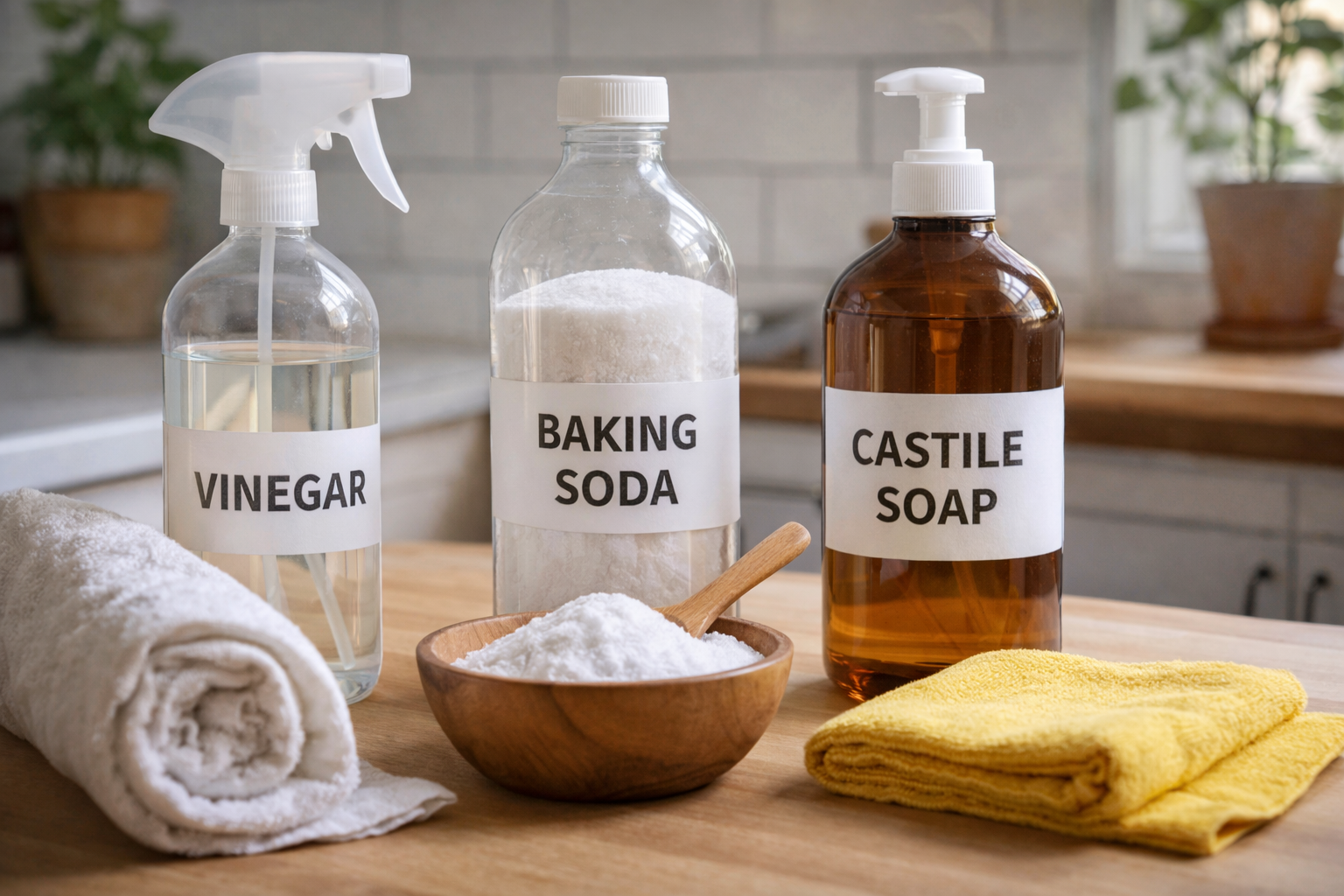
Circular cleaning systems represent the ultimate simplification of home maintenance. The modern market creates artificial needs through hyper-specialização. A different chemical for every surface is a marketing victory, but a systemic failure. It creates toxic inventories, unnecessary plastic waste, and decision fatigue. A home does not need a laboratory of synthetic surfactants. It needs a logical understanding of pH, solvency, and abrasion. This article explains how to collapse your entire cleaning inventory into a circular system based on three core ingredients.
Why the Multi-Product Model Is Structurally Inefficient
Every specialized bottle requires its own storage space. Every bottle has a different expiration date and disposal rule. Managing twenty products is a logistical burden. Simplification is the first step toward a high-performance home. Complexity hides waste.
The Chemistry of Home Surface Maintenance
Most cleaning tasks are either acidic or alkaline requirements. Mineral deposits require acids. Grease and organic matter require bases (alkalines). Once you understand this duality, the “need” for brands disappears. Science replaces consumerism.
The First Pillar: Acetic Acid (White Vinegar)
Vinegar is the workhorse of the acidic side of the system. It dissolves limescale and cuts through soap scum. It is naturally antimicrobial and evaporates without residue. In a circular system, vinegar is the primary tool for glass, faucets, and tile.
The Second Pillar: Sodium Bicarbonate (Baking Soda)
Baking soda provides the necessary alkalinity and mild abrasion. It neutralizes odors by shifting the pH balance. It acts as a mechanical scourer without scratching delicate surfaces. It is the perfect partner for deep-cleaning sinks and ovens.
The Third Pillar: Sodium Carbonate (Washing Soda) or Castille Soap
For heavy grease, you need a stronger base or a simple surfactant. Castille soap is a plant-based oil-derived cleaner. It breaks the surface tension of water to lift dirt away. Combined with the other two, it completes the functional triangle.
The Logic of “Phased Cleaning”
A circular system doesn’t mix everything at once. You apply the logic in phases. Phase one: Dissolve. Phase two: Scour. Phase three: Rinse. This sequence handles 99% of household dirt.
Why You Should Abandon Disposable Wipes
Wipes are a systemic “leak” of resources. They are non-recyclable and carry synthetic perfumes. A circular system uses a rotating textile inventory. Cotton for scrubbing, microfiber for polishing. Wash, dry, repeat—the loop stays closed.
The Role of Essential Oils in Systemic Neutralization
Fragrance in commercial cleaners is often a cover for harsh chemicals. In a circular system, scent is optional and functional. Tea tree oil provides antifungal properties. Lemon oil adds a degreasing boost. Use chemistry to enhance the system, not just to mask smells.
Why Spray Bottle Ergonomics Matter
If you use only three ingredients, the hardware becomes more important. Invest in high-quality glass or heavy-duty plastic sprayers. Color-code the bottles by pH level (Acid vs. Base). Good tools reduce the physical friction of cleaning.
Mapping the Surfaces of Your Home
Not all materials can handle the same pH. Vinegar destroys marble and natural stone. Baking soda can be too abrasive for some plastics. Create a “Surface Logic Map” for your home. Know the limits of your materials.
The Hidden Danger of Mixing Chemicals
Never mix vinegar with bleach. A circular system avoids bleach entirely to prevent toxic gas. Simplicity is also a safety strategy. Fewer ingredients mean fewer opportunities for dangerous reactions.
Why Dilution Is the Key to Efficiency
Most people use too much product. A circular system relies on concentrated bases diluted with water. Adjust the strength based on the task. Light dust requires a weak solution; heavy grime requires a concentrate.
The Impact of Hot Water on Solvency
Heat is a free energy source for cleaning. Hot water increases the kinetic energy of the molecules. It makes your three ingredients work twice as fast. Use physics to save on chemistry.
Managing the “Vinegar Smell” Paradox
People fear their home will smell like a salad. Vinegar scent disappears completely once dry. Commercial “fresh” scents are actually indoor air pollutants. True clean has no smell at all.
Why Circular Cleaning Improves Indoor Air Quality
Volatile Organic Compounds (VOCs) are concentrated in cleaning products. A home system with three basic ingredients has near-zero VOC output. You are cleaning your surfaces and your lungs simultaneously. The home is a respiratory system.
The Cost-Benefit Analysis of the Three-Ingredient Model
Commercial cleaners cost $5-$10 per bottle. Vinegar and baking soda cost cents per gallon. The financial ROI of switching is immediate and compounding. Redirect the savings into high-quality home infrastructure.
The Role of Mechanical Force vs. Chemical Reaction
If you don’t use harsh acids, you might need more “elbow grease.” A circular system values the physical act of mending the environment. Scrubbing is a form of active maintenance. It connects you to the physical state of your home.
Why You Should Buy in Industrial Quantities
Vinegar and baking soda don’t spoil. Buy the largest possible containers to reduce plastic packaging. This is “Entry Logic”: minimize the waste before it hits the door.
How to Handle “Legacy” Stains
A circular system is preventative, but it can also be curative. Paste-making (Baking soda + water) is a slow-acting deep cleaner. Time is a hidden ingredient in the system. Let the chemistry work while you do something else.
The Logic of the “Utility Closet” Reset
Remove every half-empty bottle of specialized cleaner. Dispose of them responsibly. Dedicate your storage to the three pillars. Visual order in the closet leads to mental order in the task.
Teaching the “pH Logic” to the Household
Everyone should know which bottle to grab for what. Acid for the kettle. Base for the stovetop. Shared knowledge prevents surface damage and accidents.
Why Micro-Cleaning Is Better Than Deep-Cleaning
The “big Saturday clean” is a systemic failure of daily maintenance. Five minutes of circular cleaning daily prevents buildup. Maintain the equilibrium of the home.
The Relationship Between Dust and Health
Dust is a collection of skin cells, fibers, and outdoor toxins. A circular system focuses on removal, not just moving it around. Damp dusting with a vinegar solution traps and kills.
Why Every System Needs a Professional Backup
Some tasks (like deep carpet cleaning or mold remediation) require industrial tools. Know the boundaries of your home system. Call the experts for the 1% to protect the 99%.
The Psychology of Self-Reliance in Maintenance
There is power in knowing you can clean your home without a store. It removes a layer of dependency on the global supply chain. Autonomy is the ultimate goal of Home Systems.
Why Success Is Measured in “Empty Shelves”
The less you need to store, the better the system. A single shelf for cleaning is the mark of a master.
The Long-Term Impact on Local Waterways
Everything you flush down the drain ends up in the water cycle. Vinegar and soda are biodegradable and benign. Your home system respects the larger planetary system.
Frequently Asked Questions
- Can I use this on hardwood floors? Diluted vinegar is okay for some finishes, but use caution.
- Is it safe for pets? Yes, it is the safest system for households with animals.
- Does it really kill germs? Yes, the pH shift is lethal to most common household bacteria.
- Can I use lemon juice instead of vinegar? Yes, it’s an acid, but more expensive for large tasks.
The Structural Rule of Circular Cleaning
If your cleaning routine requires a hazmat suit or twenty different bottles, it’s not a system; it’s a liability. True cleanliness is achieved through simplicity and science.

Adam Hulk is a professional barista, sensory analyst, and dedicated coffee educator with over a decade of experience in the specialty coffee industry. His journey began in the high-altitude farms of Colombia, where he spent a year studying the delicate relationship between volcanic soil and bean density.