
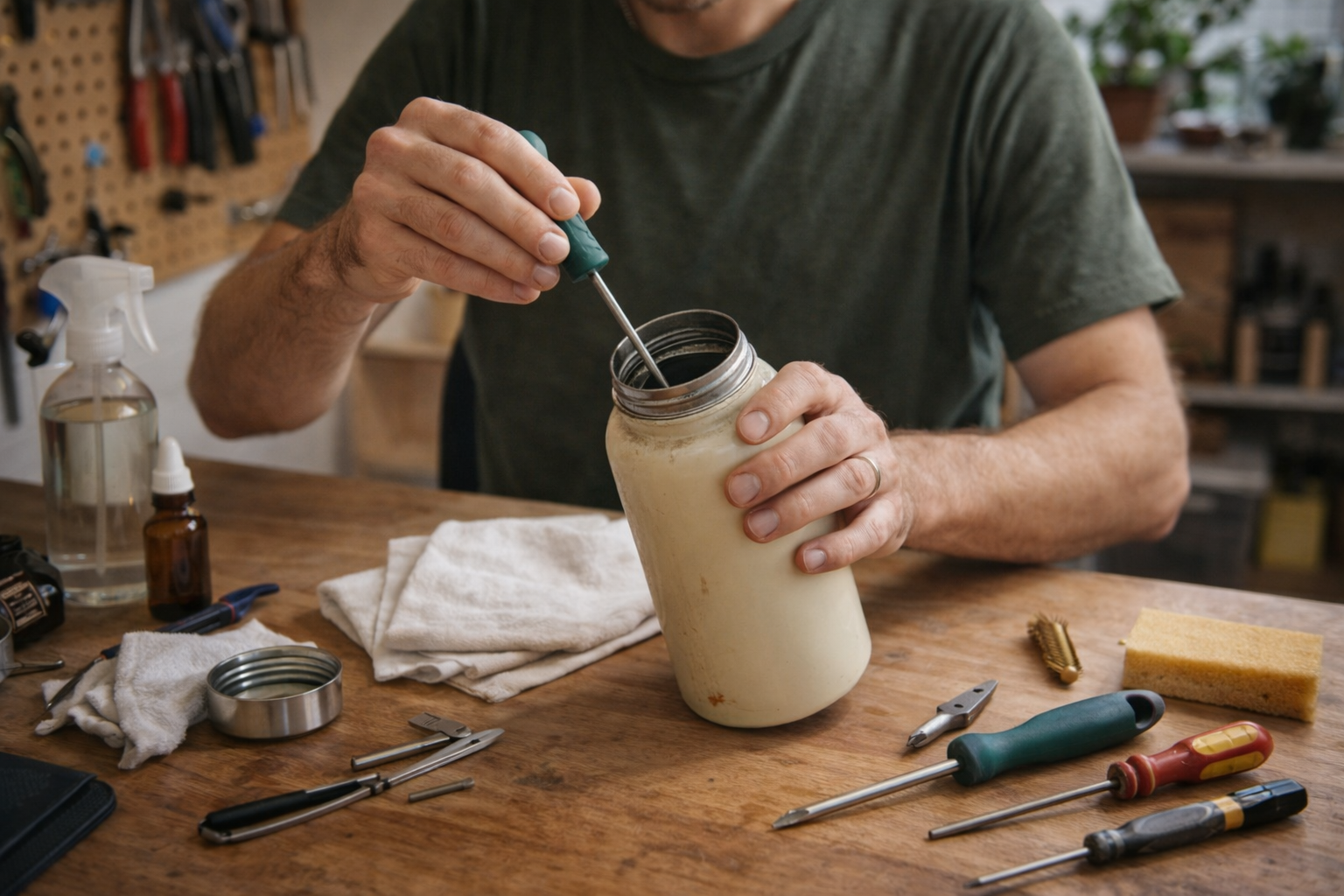
Sustainable products are marketed as a solution to waste. However, they often end up in landfills because of the maintenance gap. A product is only as sustainable as its lifespan. If a “forever” bottle is thrown away after six months because it smells, the system failed. Sustainability is not a feature of the object; it is a result of the maintenance system around it. This article explores the logic of longevity and why most people fail to keep their sustainable goods alive.
Why We Buy for “Eco-Status” but Fail at “Eco-Labor”
Buying is easy. Maintaining is hard. The status comes from the purchase. The impact comes from the repair. We must shift the status from “owning” to “maintaining.”
The Psychology of the “First Scratch”
When a new sustainable product is damaged, we lose interest. This is a cognitive bias. The “perfect” object is a myth. A repaired object has more value than a new one.
Why Most Sustainable Materials Require Specific Chemistry
Wood, bamboo, and high-grade steel are not “set and forget.” They require specific oils, waxes, or cleaning agents. If you use the wrong chemical, you destroy the material. Knowledge is the first tool of maintenance.
The Role of Tool Availability in Product Longevity
You cannot fix what you cannot open. Proprietary screws and sealed cases are enemies of sustainability. Only buy products that allow for easy entry. Repairability is a design requirement.
Why Cleaning Protocols Are Often Overlooked
Dirt is a corrosive force. Micro-particles act like sandpaper on moving parts. Regular, scheduled cleaning prevents structural failure. A clean system is a long-lasting system.
The Difference Between Wear and Damage
Wear is inevitable. Damage is preventable. Understanding the difference allows you to accept aging without discarding the item.
Why Spare Parts Should Be Bought with the Product
Manufacturers stop making parts. Buy the replacement gaskets or filters on day one. An orphan product is a dead product. Stockpiling critical components is a survival strategy for objects.
The Logic of “Preventative Sanding” and Oiling
Natural materials breathe. They dry out and crack. Preventative maintenance is cheaper than corrective repair. Oil the wood before it splits.
Why We Struggle with Electronic Longevity
Software is designed to fail before hardware. “Planned obsolescence” is a systemic attack on sustainability. Choose open-source or repair-friendly electronics whenever possible.
The Hidden Cost of “Cheap” Sustainable Alternatives
A $5 bamboo toothbrush that breaks in a week is worse than a high-quality plastic one that lasts a year. Price is a poor proxy for value. Engineering quality is the true metric.
How to Create a Home Repair Station
If you have to hunt for tools, you won’t repair. Centralize your maintenance kits. Make the act of fixing easier than the act of buying.
The Role of Documentation in Maintenance
Keep the manuals. Note the date of the last service. A home system needs a logbook.
Why User Error Is the Leading Cause of “Sustainable” Waste
Most products don’t “break”; they are “broken” by misuse. Read the logic of the tool before you use it. Skill is a sustainability multiplier.
The Impact of Storage Conditions on Material Integrity
Humidity and UV light are silent killers. Where you store your items determines how long they last. Environment is a component of the object.
Why We Need to Relearn Basic Repair Skills
Our grandparents knew how to sew and solder. We know how to click “buy now.” This loss of skill is a systemic vulnerability.
The Relationship Between Intentionality and Longevity
If you don’t care about the object, you won’t keep it. Emotional attachment is a maintenance incentive.
Why Success Is Measured in “Product Years”
The goal is to maximize the years per object. The fewer objects per decade, the better the system.
Teaching the Next Generation to Fix, Not Replace
Children watch how we treat our things. Model the behavior of repair. Inherited skills are the ultimate sustainable asset.
The Importance of Community Repair Cafes
You don’t have to know everything. Leverage collective knowledge. Social systems support physical systems.
Why “Sustainable” Plastic Is Still Plastic
Don’t be fooled by labels. Treat every material as if it were precious. Scarcity mindset prevents waste.
The Role of Upcycling in the Maintenance Cycle
When a product can no longer serve its original purpose, reassign it. A cracked bottle becomes a planter. Logic finds a new home for every material.
Why You Should Audit Your “Trash”
Look at what you are throwing away. Why did it fail? Could it have been saved? The trash is a map of your system’s failures.
The Aesthetics of Mending
“Visible mending” turns a repair into a design feature. Celebrate the history of the object. A scar is a story of resilience.
Why Professional Maintenance Is Worth the Investment
Sometimes you need an expert. Paying for a tune-up is cheaper than a new unit. Invest in professional longevity.
The Psychology of Discarding
Why do we feel relief when we throw things away? It’s a false sense of “cleaning.” Real cleanliness is a system where nothing is wasted.
How to Evaluate a Product’s “Repair Score” Before Buying
Check iFixit or similar databases. If the score is low, the sustainability is a lie.
Why This Shift Is Essential for the Planet
We cannot consume our way out of a climate crisis. Maintenance is the only radical act of environmentalism.
The Long-Term ROI of Maintenance Discipline
The money you save on “new” things funds your freedom. Maintenance is a wealth-building tool.
Frequently Asked Questions
- Is it always worth fixing? If the repair cost is < 50% of a high-quality replacement, yes.
- Where do I learn to fix things? YouTube and local workshops are goldmines.
- What tools are essential? A multi-bit screwdriver, pliers, and a sense of curiosity.
- How do I stop my family from tossing things? Show them the “repair log” and the savings.
The Structural Rule of Maintenance
A sustainable product without a maintenance plan is just a slow-moving piece of trash. Build the system, then buy the tool.

Adam Hulk is a professional barista, sensory analyst, and dedicated coffee educator with over a decade of experience in the specialty coffee industry. His journey began in the high-altitude farms of Colombia, where he spent a year studying the delicate relationship between volcanic soil and bean density.