
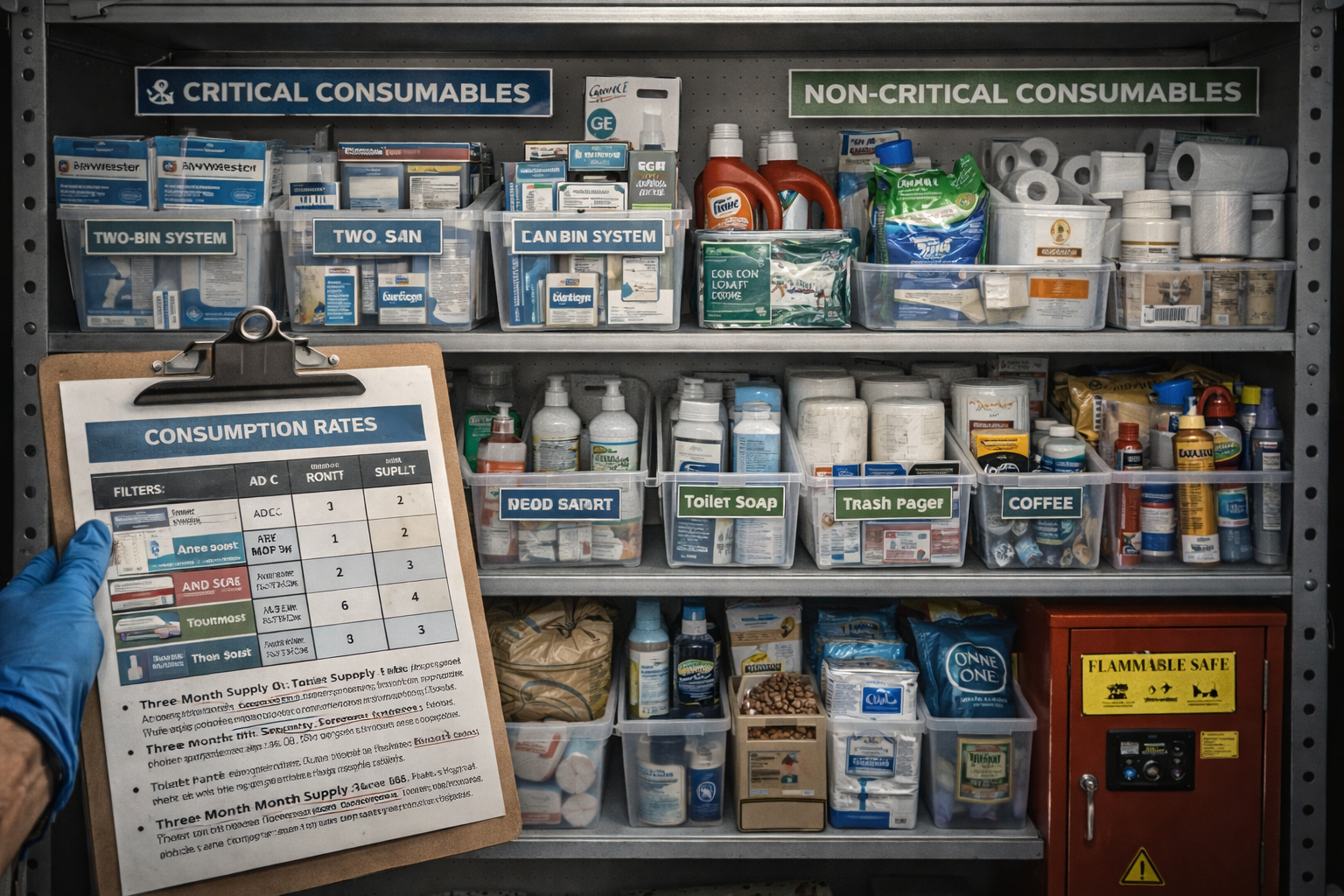
Consumables Logistics is the systematic management of items that are depleted through daily use within the home. In a high-performance domestic environment, products like soap, filters, and lightbulbs are treated as critical flow assets.
Most households suffer from “Supply Chain Blindness,” where they only notice a shortage when the last unit is consumed. Domestic Systems Engineering replaces this chaos with a “Managed Flow” that ensures continuous availability of essential goods.
This article details how to engineer a replenishment system that eliminates waste and prevents operational downtime. Learn to categorize your household consumables into “Critical” and “Non-Critical” streams for maximum efficiency and security.
A well-managed flow of consumables reduces the cognitive load on the residents and stabilizes the household budget. Mastering these logistics ensures that your home operates like a well-oiled machine, even during external supply disruptions.
The Science of “Consumption Rates”
The first step in managing consumables is understanding the “Average Daily Consumption” (ADC) of your most-used items. Track how long it takes for your household to finish a gallon of detergent or a specific pack of filters.
Knowing your ADC allows you to predict exactly when your inventory will reach its “Reorder Point” (ROP). This data-driven approach removes the guesswork from shopping and prevents both overstocking and unexpected shortages.
Consumption rates are the “Pulse” of your domestic logistics system, revealing the true requirements of your lifestyle. Engineering your supply around actual data creates a lean and responsive inventory that saves money and space.
Categorizing the “Critical Consumables”
Not all consumable items have the same impact on your home’s operational stability or safety protocols. “Critical Consumables” are those that, if missing, would compromise health, security, or primary system functions.
This category includes items like water filters, specialized cleaning agents, and specific medical hygiene supplies. Non-critical items are those that can be substituted or delayed without causing a systemic failure in the household.
By prioritizing critical streams, you focus your logistical energy on maintaining the most vital links in your chain. A high-performance home ensures 100% availability for critical assets while remaining flexible on the non-essentials.
Implementing the Two-Bin System
The “Two-Bin System” is a simple but effective visual tool borrowed from lean manufacturing to manage small consumables. Items are stored in two identical bins; when the first bin is empty, you move to the second.
The empty bin then serves as a “Visual Signal” that it is time to reorder or replenish that specific item. This ensures that you always have a full bin in reserve while the new stock is being acquired or delivered.
This method is ideal for items like fasteners, batteries, or office supplies that are easy to lose track of. It provides an intuitive, low-tech way for all family members to participate in the domestic logistics process.
Standardizing the Cleaning Chemistry
A major source of logistical friction is the accumulation of dozens of different, specialized cleaning chemicals. Simplify your “Cleaning Stream” by standardizing on a few high-quality, multi-purpose concentrates that handle 90% of tasks.
Concentrates offer higher “Logistical Density,” meaning you store more cleaning power in a much smaller physical space. They also allow you to mix exactly the strength you need, reducing chemical waste and environmental impact.
Standardization makes inventory tracking easier and ensures that you never run out of a “Niche” cleaner. In domestic engineering, versatility in your chemistry is a key component of systemic resilience and simplicity.
The Logistics of Filtration Systems
Modern homes rely on various filters to maintain air quality, water purity, and mechanical efficiency in HVAC units. Filtration assets are “Time-Based Consumables” that must be replaced on a strict schedule to remain effective.
Maintain a “Filter Inventory” that covers one full year of replacements for all your home’s primary systems. Log the “Installation Date” directly on the filter housing to make the maintenance cycle visible to any observer.
Neglecting filter logistics leads to higher energy costs and the premature failure of expensive mechanical systems. A clean filter is the most cost-effective way to protect the “Respiratory Health” of your home and your family.
Managing the “Hygiene Buffer”
Personal hygiene is a fundamental requirement for maintaining morale and preventing disease within the home. The “Hygiene Buffer” consists of a 90-day reserve of soap, toothpaste, and sanitation supplies for all residents.
These items have a very long shelf life and can be easily stored in a cool, dry area of the domestic warehouse. A robust buffer ensures that personal care is never compromised by short-term economic shifts or local shortages.
Hygiene logistics is the “Bio-Security” layer of your household, keeping the human operators healthy and functional. Treat these assets with the same priority as food or water to ensure total domestic resilience.
Automated Subscription Logistics
For non-critical consumables, “Subscription Services” can automate the replenishment process and reduce your mental load. Set up recurring deliveries for items with a highly predictable ADC, such as coffee, toilet paper, or pet food.
Automated logistics ensures that the “Supply Chain” works in the background without requiring your active intervention. This frees up your time to focus on managing the more complex and critical aspects of your home engineering.
However, ensure that you periodically audit your subscriptions to prevent “Inventory Bloat” or unnecessary costs. Technology should be the servant of your logistics plan, not a source of automated waste or over-consumption.
The Storage of “Volatile” Consumables
Certain consumables, like aerosol sprays or high-concentration alcohols, require specialized storage for safety. Keep these items in a “Flammable-Safe” cabinet away from heat sources and the primary living areas of the home.
Proper storage prevents the degradation of the product and reduces the “Fire Load” of your domestic inventory. Logistics management includes the safety of the resource during its entire “Lifecycle” within your property.
Safety is the primary constraint of all resource logistics; if you cannot store it safely, you cannot own it. Follow all local codes and professional guidelines for the storage of volatile or hazardous household assets.
Disposal and End-of-Life Logistics
Managing consumables is a “Cradle-to-Grave” responsibility that includes the proper disposal of the empty packaging. Integrate your replenishment cycle with your “Circular Economy” protocols to minimize the landfill impact of your home.
Choose products with minimal packaging or those that come in reusable or highly recyclable containers. The logistics of the “Empty Bottle” is just as important as the logistics of the “Full Bottle” in a high-performance home.
Efficient waste management ensures that your supply chain does not create a “Clutter Crisis” in your sorting hub. True domestic engineers manage the entire flow, from acquisition to recovery, with equal precision.
Frequently Asked Questions
- How much should I store? Aim for a 30-day “Working Inventory” and a 90-day “Emergency Buffer.”
- Where should I keep the list? A digital shared list on a mobile phone is the most accessible for all residents.
- Is “Store Brand” always worse? For many consumables like salt or bleach, the chemical purity is nearly identical.
- What if an item expires? Consumables like detergents lose potency slowly but usually remain safe for years.
The Structural Rule of Consumables Logistics
If your daily life stops because you ran out of a $5 item, your domestic system has failed. Engineer your flow today so you never have to interrupt your mission for a missing resource.

Adam Hulk is a professional barista, sensory analyst, and dedicated coffee educator with over a decade of experience in the specialty coffee industry. His journey began in the high-altitude farms of Colombia, where he spent a year studying the delicate relationship between volcanic soil and bean density.