
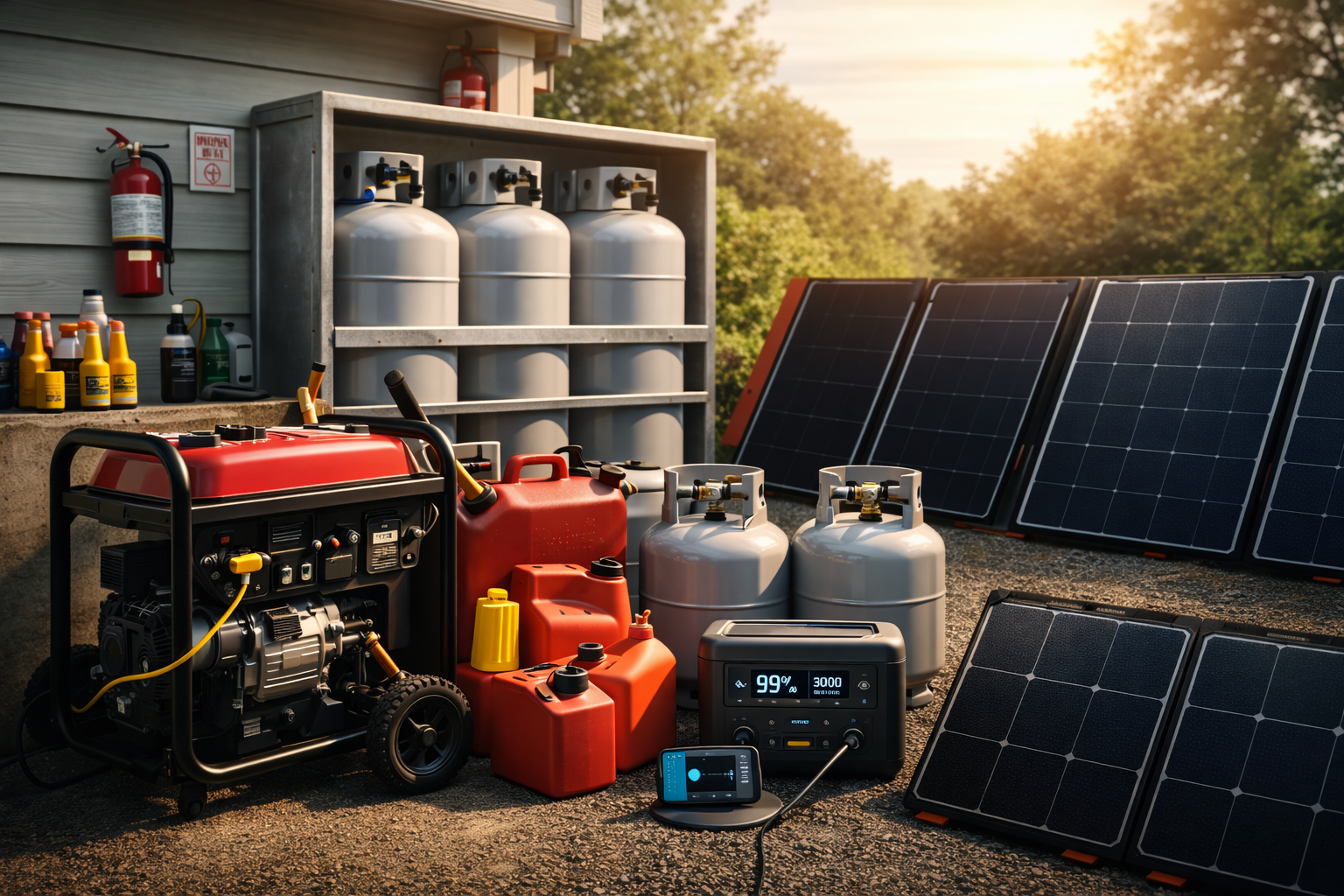
Fuel and Energy Storage is the logistical challenge of maintaining the “Potential Energy” required to power your home during a grid failure. In a high-performance domestic system, energy is treated as a physical inventory that must be managed, rotated, and secured.
Most homes are entirely dependent on “Flow-Based” energy, where power arrives through a wire or a pipe in real-time. If that flow is interrupted, the home has zero “Static Reserves” to maintain its critical life-support and security functions.
Domestic Systems Engineering requires a transition to an “Energy-Stock” model where you maintain on-site reserves of fuel. This article details the logistics of storing gasoline, propane, and portable electricity to ensure continuous domestic operations.
Learn how to manage the chemical and electrical stability of your fuel reserves to prevent degradation and safety hazards. A resilient home is one that carries its own “Energy Buffer” to bridge the gap between disaster and recovery.
The Logic of the Energy Buffer
The energy buffer is a calculated reserve of fuel designed to keep your most critical systems running for a specific duration. In a standard resilient home, the objective is to maintain at least 72 hours of full autonomy for heat and light.
Calculating this buffer requires a precise understanding of the “Burn Rate” of your generators and heating appliances. Logistics management ensures that you have the right fuel, in the right quantity, and in a state that is ready for immediate use.
Without a managed buffer, even the most expensive emergency generator is nothing more than a useless piece of heavy metal. Static energy reserves provide the “Startup Power” needed to transition your home into a self-sustaining island mode.
Managing Liquid Fuel Stability
Gasoline and diesel are unstable chemical compounds that begin to degrade and “varnish” within months of purchase. Engineering a liquid fuel reserve requires the active use of “Fuel Stabilizers” to extend the shelf life of the inventory.
Store gasoline in high-quality, airtight containers that prevent the evaporation of high-octane components and moisture absorption. Rotate your fuel supply by using the oldest containers in your vehicle and refilling them with fresh fuel every six months.
This “Rotation Protocol” ensures that your emergency fuel is always fresh and capable of starting a cold engine. Liquid fuel is a “Degrading Asset” that must be managed with a strict “First-In, First-Out” (FIFO) logistics discipline.
The Advantages of Propane Logistics
Propane is a superior fuel for long-term domestic logistics because it does not degrade or expire over time. A sealed propane tank can sit for decades and still provide 100% of its rated energy density when opened.
Propane is also a “Multi-Use” fuel that can power generators, portable heaters, and emergency cooking stoves simultaneously. Engineering your home around propane reduces the complexity of your fuel inventory and improves your long-term storage safety.
Maintain a “Tank Bank” of at least four 20lb cylinders to provide a modular and portable energy reserve for the household. Propane provides the highest “Storage-to-Utility” ratio for homes that want a low-maintenance energy backup system.
Portable Battery Logistics and Cycles
Portable power stations (solar generators) represent the “Digital Fuel” needed to keep electronics and medical devices active. Unlike chemical fuels, batteries require a “Charge Management Protocol” to ensure they do not lose capacity over time.
Maintain your lithium-ion batteries at a 50% to 80% charge level for long-term storage to maximize their chemical lifespan. Perform a “Cycle Test” every three months by discharging the battery to 20% and recharging it back to its storage level.
Batteries are the “Quiet Power” of the home, allowing for nighttime operations without the noise or fumes of a combustion engine. Managing the “State of Charge” (SoC) is the primary logistical task for maintaining an electrical energy reserve.
Fire Safety and Storage Codes
Storing high volumes of flammable fuel creates a significant “Fire Load” that must be mitigated through proper engineering. Never store gasoline or large propane tanks inside the living space or the basement of your primary residence.
Utilize a dedicated “Fuel Locker” or a detached shed that is well-ventilated and located away from potential ignition sources. Equip your fuel storage area with specialized Class B fire extinguishers and clear “No Smoking” signage for safety.
Logistics is not just about having the resource; it is about housing it in a way that does not threaten the system. Safety compliance is a non-negotiable part of the Domestic Systems Engineering framework for energy storage.
The Role of Portable Solar Recharging
Solar panels are the “Harvesting Logistics” that allow you to replenish your electrical reserves without external inputs. In a prolonged crisis, your battery storage will eventually run dry unless you have a way to capture the sun’s energy.
Include foldable, high-efficiency solar blankets in your energy inventory to provide a modular recharging capability for your power stations. Match the wattage of your panels to the input capacity of your batteries to ensure an efficient “Charge-to-Use” ratio.
Solar harvesting turns your home into a “Renewable Node” that is not dependent on the arrival of fuel trucks. It is the ultimate logistical backup for long-term energy independence in a disrupted world.
Standardizing Fuel Connectors
In a crisis, searching for the right adapter or hose is a “System Failure” that can lead to high levels of stress. Standardize all your fuel-burning equipment to use the same connectors, such as the 1lb or 20lb propane fittings.
Maintain a “Connector Kit” that includes high-pressure hoses, regulators, and adapters for all your portable energy assets. Label each hose and adapter clearly so they can be identified and deployed quickly in low-light or high-stress conditions.
Interchangeability is a core engineering principle that reduces the “Friction” of managing a complex energy inventory. Standardizing your hardware ensures that any fuel source can be connected to any compatible appliance.
Monitoring Energy Reserves with Data
A resilient home uses “Data-Driven Logistics” to know exactly how much energy is remaining in the system. Use Bluetooth-enabled propane scales and digital battery monitors to track your energy levels from your smartphone.
Knowing that you have exactly 14 hours of generator run-time remaining allows you to make informed rationing decisions. Precision in measurement prevents the “Surprise Failure” that occurs when you rely on guesswork for your fuel levels.
Information about your reserves is just as important as the reserves themselves for effective crisis management. Smart monitoring transforms a pile of fuel tanks into a sophisticated energy management system.
The Logistics of “Energy Rationing”
Rationing is the logistical practice of reducing consumption to extend the life of your energy reserves. During a crisis, prioritize “Life-Support” tasks like refrigeration and communication over “Comfort” tasks like television.
Establish a “Rationing Protocol” that defines exactly which systems will be powered at different battery or fuel levels. By cutting your consumption by 50%, you effectively double the duration of your domestic energy buffer.
Rationing is the “Active Defense” of your energy inventory, ensuring that you have power for the things that truly matter. Discipline in usage is the highest form of energy logistics in a resource-constrained environment.
Frequently Asked Questions
- How much gas is safe to store? Most residential codes allow up to 25 gallons in a detached, ventilated structure.
- Does propane ever go bad? No, but the rubber seals on the tanks can degrade after 10 to 12 years.
- Can I charge my car with a portable battery? Most portable units are too small; they are for lights and electronics.
- What is the best fuel for cold weather? Propane works well, but butane can fail to vaporize in freezing temperatures.
The Structural Rule of Energy Logistics
Potential energy is the only thing that stands between a functional home and a dark, cold shelter. Engineer your fuel reserves today so you can maintain command of your environment tomorrow.

Adam Hulk is a professional barista, sensory analyst, and dedicated coffee educator with over a decade of experience in the specialty coffee industry. His journey began in the high-altitude farms of Colombia, where he spent a year studying the delicate relationship between volcanic soil and bean density.