
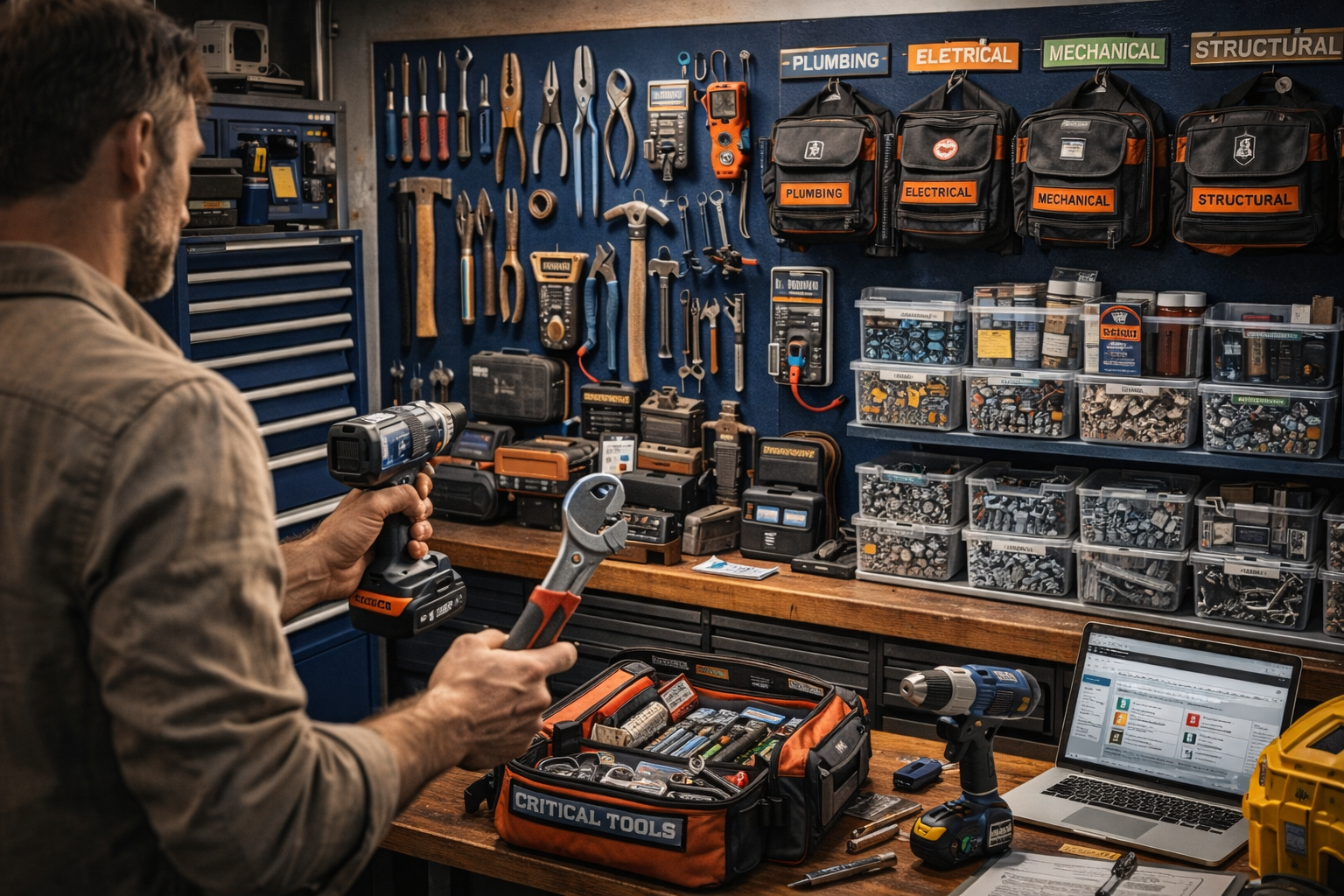
The Tool Library is the centralized logistics hub for the physical maintenance and repair of your home. In a high-performance domestic system, tools are not just clutter in a drawer; they are the “Hardware Assets” of your repair infrastructure.
Most households lose significant time and money because they cannot find the specific tool needed for a critical repair. Domestic Systems Engineering treats tool management as an inventory problem that requires organization, accessibility, and precision.
This article explores how to engineer a professional-grade tool library within a residential environment. Learn to categorize your assets so that every repair task is supported by the correct instrument at the correct time.
Managing your tools as a library ensures that your home remains in a constant “Ready-State” for maintenance. A well-organized shop is the difference between a minor weekend fix and a cascading systemic failure of your property.
The Logic of “Point-of-Use” Tool Storage
Point-of-use storage is the logistical strategy of placing tools exactly where the work is most likely to happen. Instead of one massive, distant toolbox, maintain “Secondary Kits” in high-activity zones like the kitchen or the garage.
A small “Daily-Fix Kit” in the kitchen can handle 80% of minor domestic adjustments without a trip to the workshop. This reduces the “Friction” of maintenance and encourages small repairs before they become large, expensive problems.
Engineering your tool placement optimizes the “Workflow” of your home’s internal maintenance team. Accessibility is the primary driver of a high-performance repair culture within the domestic environment.
Categorizing by Functional Systems
Organize your tool library based on the domestic sub-systems they service: Plumbing, Electrical, Structural, and Mechanical. This “Systems-Based Organization” allows you to grab a single, dedicated bag and have everything needed for a specific trade.
Plumbing tools like pipe wrenches and plungers should be grouped together to handle leaks and blockages with speed. Electrical tools like multimeters and wire strippers require their own clean, dry environment to maintain their calibration and safety.
Grouping tools by function reflects the industrial reality of how home systems are actually repaired and maintained. It simplifies the audit process and ensures that no critical specialized tool is missing from the system.
The Shadow Board and Visual Inventory
A “Shadow Board” is a visual management tool where the outline of each tool is painted or marked on a wall. This creates an immediate “Visual Signal” that tells the operator exactly which asset is missing from the library.
Shadow boards eliminate the “Clutter Stress” of searching through deep, dark drawers for a specific wrench or hammer. They also ensure that every tool is returned to its “Home Address” after the maintenance task is completed.
In an emergency, you do not have time to dig through a pile of metal for the one tool that can stop a flood. Visual inventory is the fastest way to verify that your repair infrastructure is 100% complete and ready.
Tool Redundancy and the “Two is One” Rule
High-performance logistics requires redundancy for the most critical manual tools in your domestic inventory. If your only high-quality screwdriver breaks or is lost, your ability to perform repairs drops to zero.
Maintain a “Primary Set” of professional-grade tools and a “Secondary Set” for heavy-duty or loaner use. Focus redundancy on high-wear items like drill bits, utility blades, and common wrenches that are prone to failure.
Redundancy is the “Insurance Policy” for your home’s maintenance capability during a crisis or isolation. Having a backup ensures that a single broken tool does not lead to the total paralysis of your repair schedule.
Precision Instruments and Calibration
Many domestic systems, like solar inverters or HVAC sensors, require “Precision Instruments” for accurate diagnosis. Multimeters, thermal cameras, and moisture meters must be stored in protective cases to maintain their accuracy over time.
Logistics management for these assets includes a “Calibration Schedule” to ensure the data they provide is reliable. A measurement tool that provides incorrect data is a liability that can lead to dangerous engineering errors.
Treat your precision gear with the same respect as medical equipment within your home’s resource inventory. Data-driven maintenance is only possible when your instruments are functioning at their peak factory specifications.
Fastener and Consumable Hardware Logistics
A tool is useless if you do not have the specific “Consumable” needed to complete the repair, such as screws or fuses. Engineering a “Hardware Library” involves maintaining a standardized inventory of common fasteners and adhesives.
Use transparent, modular bins to store various sizes of screws, nuts, bolts, and electrical connectors. Label these bins with “Reorder Points” so you can replenish your hardware before you run out during a job.
Consumable logistics prevent the “Stop-and-Go” repair process where you must visit a store for a single bolt. Maintaining a hardware buffer is the secret to rapid, professional-grade home maintenance and resilience.
Maintenance of the Tool Assets
Tools are themselves physical systems that require regular cleaning, lubrication, and sharpening to remain functional. Implement a “Maintenance Ritual” where tools are wiped down and inspected for rust before being returned to the board.
Cutting tools, like saws and chisels, must be kept sharp to ensure safety and efficiency during structural repairs. Batteries for cordless tools should be cycled and charged according to a strict monthly management protocol.
A neglected tool is a dangerous tool that increases the risk of injury and the likelihood of a failed repair. The logistics of repair include the lifelong care of the assets that make the repair possible.
Portability and the “Go-Bag” Logic
Sometimes the repair task is located in a tight crawlspace or an exterior area far from the main library. Engineer “Portable Modules” using durable bags or stackable boxes that can be transported to the work site easily.
A “Mobile Maintenance Unit” should include a versatile selection of tools for multiple trades and basic hardware. This allows you to move the “Capability” of the workshop to the problem without multiple trips back and forth.
Portability increases the speed of your response to domestic emergencies like pipe bursts or electrical shorts. The ability to mobilize your library is a key component of high-performance resource logistics.
Shared Knowledge and Digital Documentation
The tool library is supported by a “Knowledge Base” that explains how to use each specialized instrument correctly. Maintain a digital folder or a physical binder of “Operator Manuals” for all complex power tools and diagnostic gear.
Include “Quick-Start Guides” and safety checklists to ensure that every resident can operate the tools without error. Knowledge is the “Software” that allows the human component to interact successfully with the physical hardware.
Information logistics ensure that your tools are used to their full potential while minimizing the risk of damage. A library is not just a collection of objects; it is a repository of the capability to fix the world.
Frequently Asked Questions
- Should I buy cordless or corded? Cordless is for speed; corded is for unlimited runtime and longevity.
- Is “Store Brand” okay? For occasional use, yes; for “Critical Tools,” always buy professional-grade.
- How do I prevent rust? Use silica packets in drawers and keep tools lightly oiled with a rust inhibitor.
- What is the most important tool? A high-quality multimeter is the most vital tool for diagnosing modern home systems.
The Structural Rule of the Tool Library
A missing tool is a missing capability that leaves your home vulnerable to the decay of entropy. Engineer your library today so you are never a spectator to the failure of your own domestic systems.

Adam Hulk is a professional barista, sensory analyst, and dedicated coffee educator with over a decade of experience in the specialty coffee industry. His journey began in the high-altitude farms of Colombia, where he spent a year studying the delicate relationship between volcanic soil and bean density.