
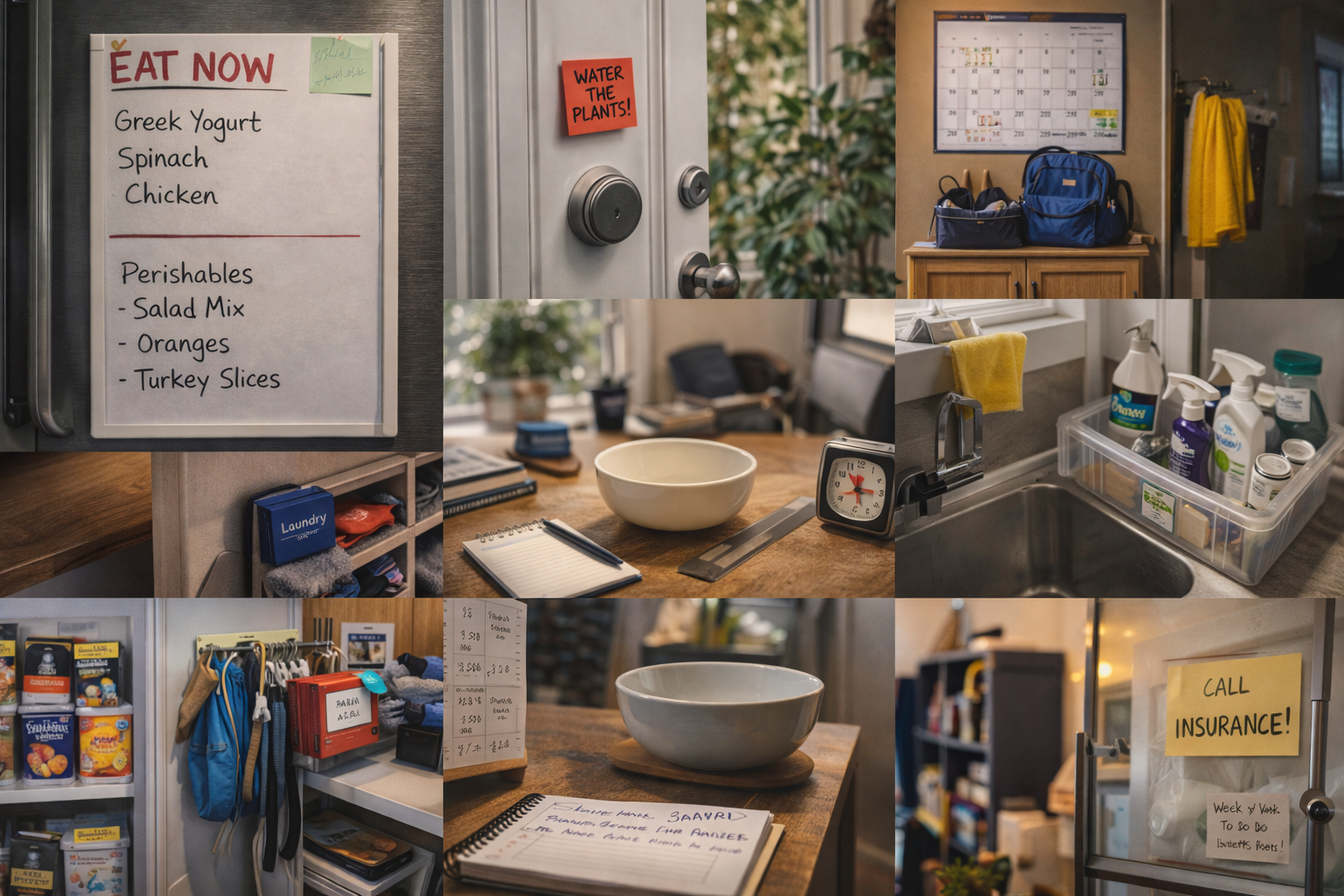
Automated accountability is the secret to consistency. Most people rely on willpower. Willpower is a finite resource. It fails when you are tired. It fails when you are stressed. High-performance homes use the environment. They use “Low-Tech Cues” for guidance. These are physical signals in your space. They nudge you toward the right action. They remove the need for memory. This article explains the logic of physical cues. Learn to design a home that manages you.
Why Your Brain Ignores Digital Reminders
Phones are full of constant “noise.” App notifications are easy to swipe away. They lack physical presence in your world. Your brain treats them as “digital ghosts.” A physical object cannot be swiped away. It occupies space in your visual field. It creates a “tangible tension” until resolved. Physical cues beat digital ones every time.
The Concept of “Environmental Priming”
Priming prepares a system for an action. You prime the environment to reduce friction. Place your gym shoes on the bedroom door. You must step over them to exit. This is a low-tech “if-then” statement. If you see the shoes, you go to the gym. The environment makes the choice for you. Design the path to trigger the habit.
Using the “Obstacle Logic” for Accountability
Sometimes the best cue is a barrier. Place the TV remote in a high cabinet. Place a book on the sofa cushion. To watch TV, you must perform labor. To read, you simply sit down. Make bad habits difficult to start. Make good habits impossible to avoid. Control the physics of your choices.
The Power of “Visual Breadcrumbs”
Breadcrumbs guide you through a sequence. Line up your vitamins next to your water glass. Place your journal on top of your laptop. Each object leads to the next task. The sequence becomes a mechanical flow. You don’t need a “To-Do” list. The objects tell the story of your day.
Why Your Fridge Needs a “Visual Audit”
The fridge is a hidden system. Food dies in the back of the drawers. Use a magnetic white board on the door. List the perishable assets inside. Write the “Eat Now” items in red. The board is a low-tech data display. It forces accountability for food waste.
The “Visible Calendar” on the Wall
Digital calendars are “hidden” inside apps. A giant wall calendar is always “on.” It shows the landscape of your month. It creates a sense of time pressure. It makes upcoming deadlines unavoidable. Seeing the whole month creates perspective. Analog time-tracking anchors the mind.
Why You Should Use “Point-of-Use” Labels
Labels are structural instructions. Label the specific bins in your pantry. Label the “permanent addresses” of tools. A label is a contract with the space. It tells you where the object belongs. It removes the “where does this go?” choice. Clarity is the foundation of order.
The “Mirror Note” Strategy
The bathroom mirror is high-value real estate. It is the first thing you see. Use a dry-erase marker on the glass. Write your primary objective for the day. You cannot look at yourself without seeing it. It anchors your intention in the morning. The mirror becomes a dashboard for life.
Why the “Laundry Basket” is a Systemic Cue
An overflowing basket is a loud signal. It tells you the batch is ready. Do not hide the basket in a closet. Keep it where the flow is visible. The visual “pressure” drives the action. Let the material dictate the schedule.
Using “Task Trays” to Group Habits
A tray holds the context for a task. A “Morning Coffee Tray” with beans and a mug. A “Bills Tray” with a pen and a calculator. When you move the tray, the task begins. Trays make habits portable and modular. They protect the surfaces from “spread.”
The “Sticky Note” as a Temporary Circuit
Use sticky notes for “dynamic” cues. “Water the plants” on the front door. “Check the oven” on the fridge. The bright color breaks the visual habit. Once the task is done, destroy the note. The destruction is the “system reset.”
Why You Should “Stage” Your Morning
Staging is preparing the set for a play. Set the coffee timer at night. Lay out your work-from-home gear. Fill your water bottle and place it. Your morning self follows the script. The evening self is the director. Avoid decisions before 8 AM.
The “Empty Bowl” Accountability
Place an empty bowl on your desk. It represents an “open loop” or a task. When the task is done, the bowl is stored. The physical presence of the empty space irks. The brain wants to fill or clear the void. Use the psychology of completion.
Using “Timer Logic” Without the App
Use a mechanical kitchen timer. The “ticking” sound is a rhythmic cue. It creates an audible “Deep Work” zone. The “ding” is a physical reward. Mechanical tools engage more senses. Senses drive deeper focus.
The “Clothes Hook” Protocol
Hooks are lower friction than hangers. Install hooks for “active” clothes. The coat, the robe, the workout gear. If the hook is full, the system is full. It prevents the “chair pile” phenomenon. Hooks are low-tech volume meters.
Why Your Keys Need a “Bowl of Power”
The “Key Bowl” is the exit gate. Place your wallet and sunglasses there too. This is your “Essential Kit” station. If the bowl is empty, you are ready. Never search for the basics again. Searching is a failure of cue design.
The “Bed-Making” as a Systemic Reset
Making the bed is a low-tech “Done” signal. It tells the brain the rest phase is over. It transforms the room into an active space. It is the first win of the day. The visual order settles the mind.
Using “Color Coding” for Shared Habits
If you share a home, use colors. Blue towels for person A, red for person B. Each person is accountable for their color. It makes “ownerless” mess impossible. Color is a universal, low-tech language.
The “Nightstand Audit”
The nightstand should only hold sleep cues. A book, a glass of water, a lamp. Remove the phone and the laptop. The furniture dictates the behavior. If it doesn’t support sleep, it leaves.
Why “Clear Bins” Are Better Than Opaque Ones
Opaque bins hide the reality of the mess. Clear bins provide “visual feedback.” You see the inventory at a glance. You are accountable for the contents. Transparency is the best regulator.
The “Hook and Loop” Cable Management
Loose cables are visual “static.” Group them with simple Velcro ties. A clean line is a low-friction cue. It tells the brain the tech is “managed.” Order in the wires creates order in the mind.
Using “Door Cues” for Room Transitions
Hang a specific item on the doorknob. A gym bag means “leave now.” A cleaning cloth means “clean this room.” The knob is a mandatory interaction point. Use the architecture to nudge the body.
The “Plants as Bio-Monitors”
Plants are the ultimate accountability cues. If they droop, you have failed a habit. They represent the “health” of the system. Caring for them builds systemic discipline. They are living feedback loops.
Why You Should “Standardize” Your Tools
Use the same pens, the same notebooks. Familiarity reduces the “startup” friction. The tool becomes an extension of the hand. A standard tool is a silent cue to work.
The “Audit of the Cues”
Once a month, check your physical cues. Are they still working? Or is there “blindness”? Sometimes we stop seeing the sticky note. Change the color or the location. Novelty keeps the accountability sharp.
Success is Measured in “Zero-Effort”
The best systems feel like they run themselves. You don’t “try” to have good habits. You simply follow the physical path. Automation is the highest form of design.
The Long-Term ROI of Low-Tech
Low-tech cues don’t need batteries. They don’t need Wi-Fi or updates. They are permanent architectural features. They provide a lifetime of stability.
Frequently Asked Questions
- Will my house look messy? Not if the cues are designed into the decor.
- What if I have too many cues? Then you have “cue-clutter.” Keep it simple.
- Does this work for kids? It works best for kids; they follow visual logic.
- Is this “cheating”? No, it’s engineering.
The Structural Rule of Automated Accountability
Don’t fight your nature with willpower. Use your environment to outsmart your laziness. Make the right choice the only visible choice.

Adam Hulk is a professional barista, sensory analyst, and dedicated coffee educator with over a decade of experience in the specialty coffee industry. His journey began in the high-altitude farms of Colombia, where he spent a year studying the delicate relationship between volcanic soil and bean density.